
Family owned & operated since 1958
 Since 1958
A history in photographs from the Schoenith family collection
Almost none of this has been online before. The photographs are the family's own, scanned from prints in boxes. Everything stated here is sourced. Eight chapters, and not one of them is long.
ITHE NAME
1950
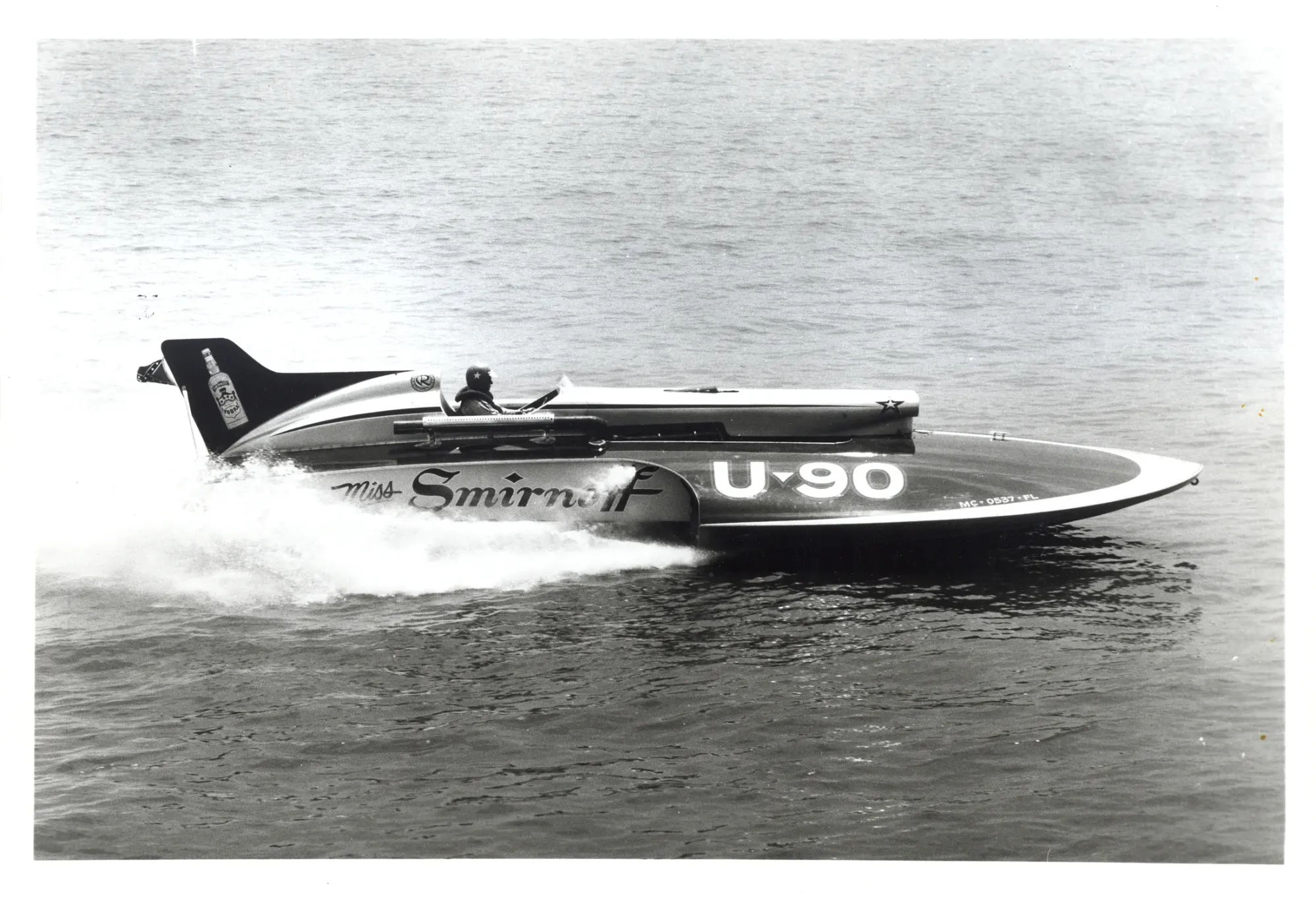
A hydroplane running flat out throws a curtain of water off its stern, as high as seventy-five feet. That plume is the name of this place. Joe Schoenith raced the boats that made it. Everything else here follows from that.
IITHE BOATS
1955
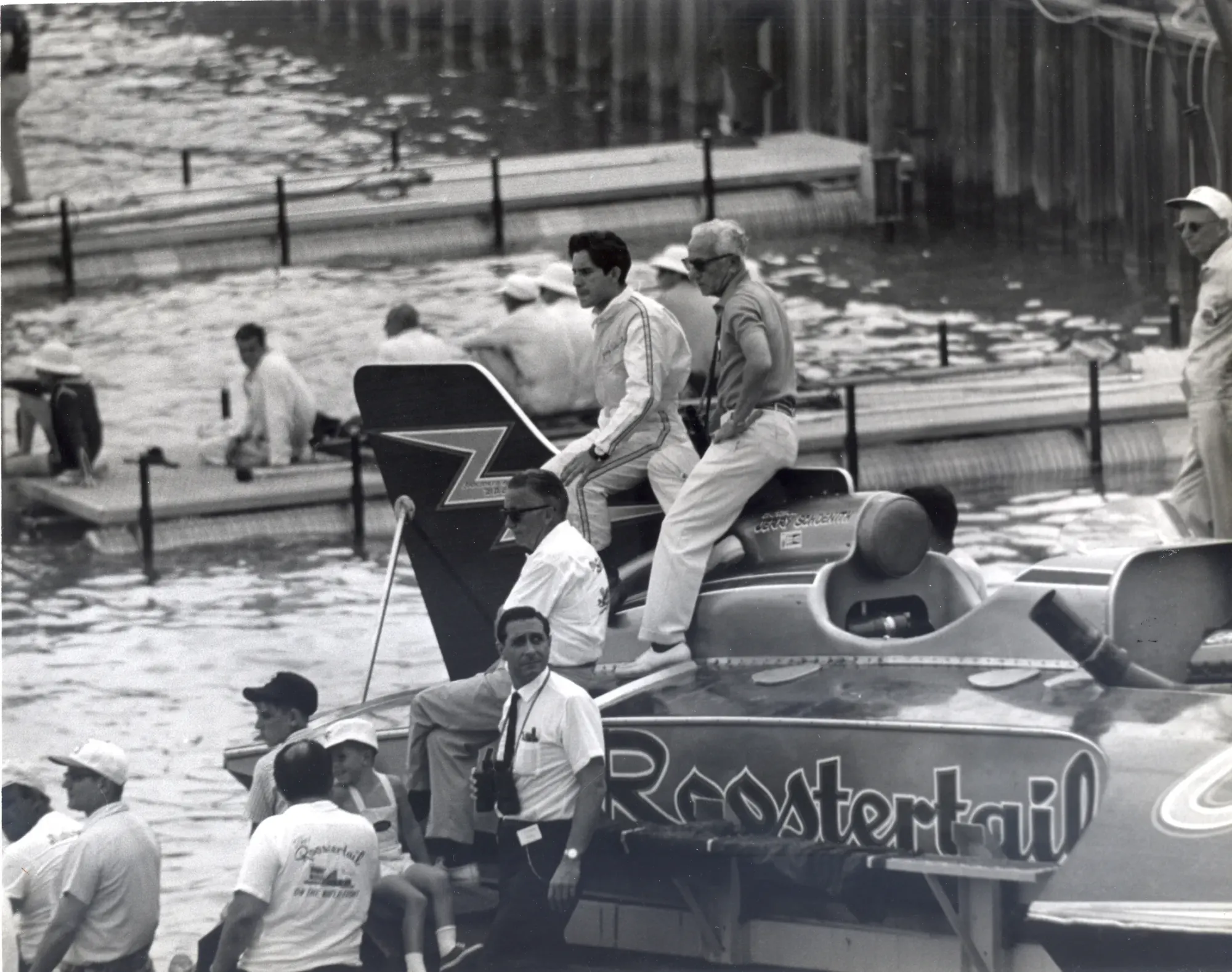
Joe Schoenith bought a Detroit electrical contracting firm named W. D. Gale and advertised it with race boats. Sixteen hulls over twenty-six seasons. Twenty-seven wins.
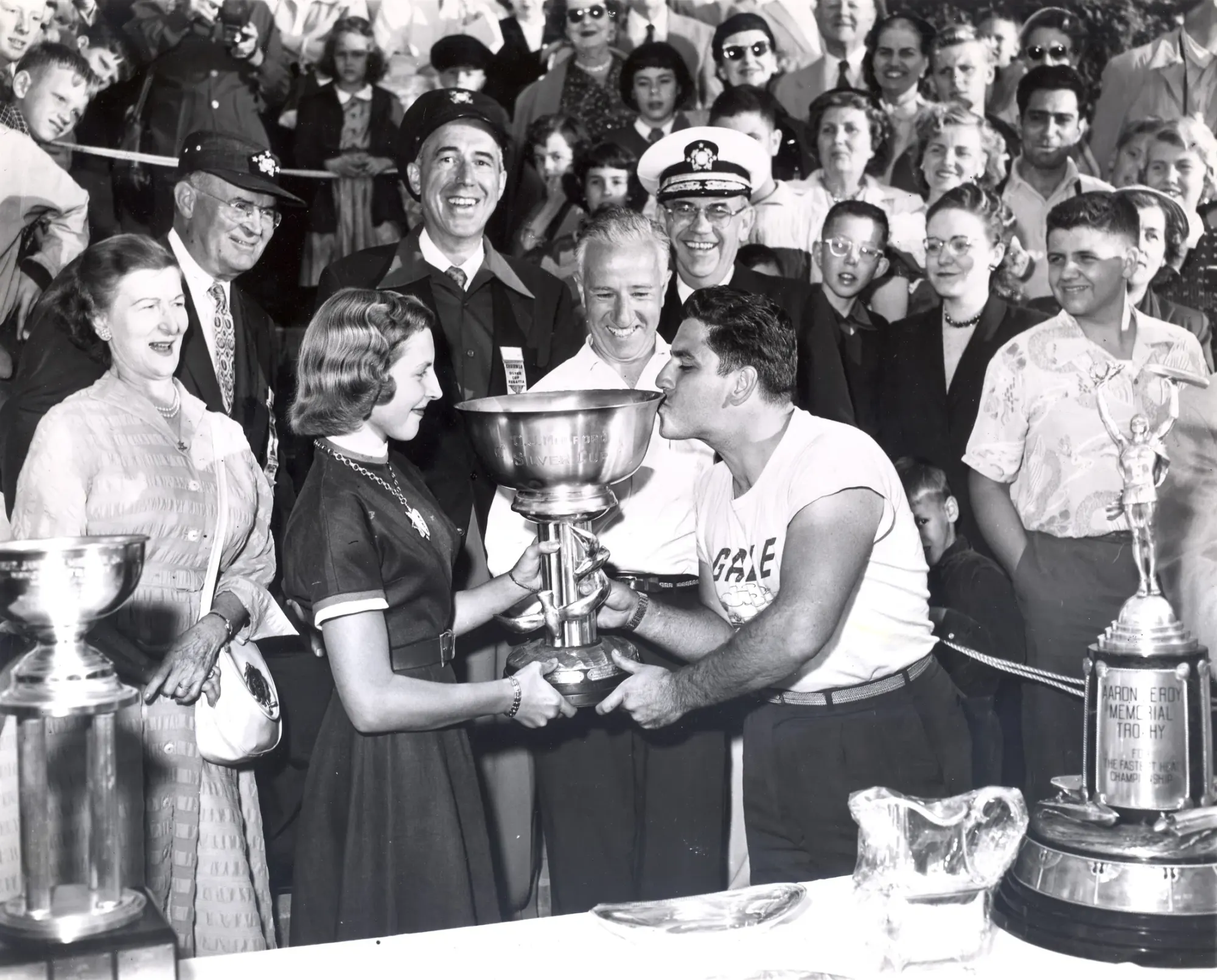
On August 7, 1955, his son Lee drove Gale V to the APBA Gold Cup at Seattle without winning a single heat. He took it on the speed bonus, by 4.536 seconds over ninety miles. The Cup came back to Detroit. Three years later the club opened on the racecourse itself.
Schoenith family collection
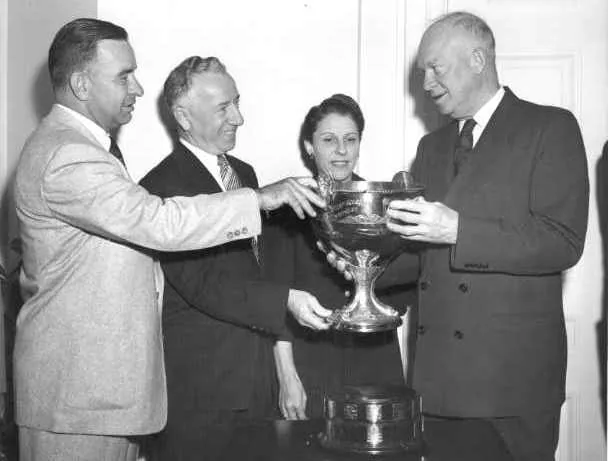
Now I know it is official.
Joe Schoenith, carrying the Gold Cup onto the plane home, 1955
IIITHE BUILDING
1958
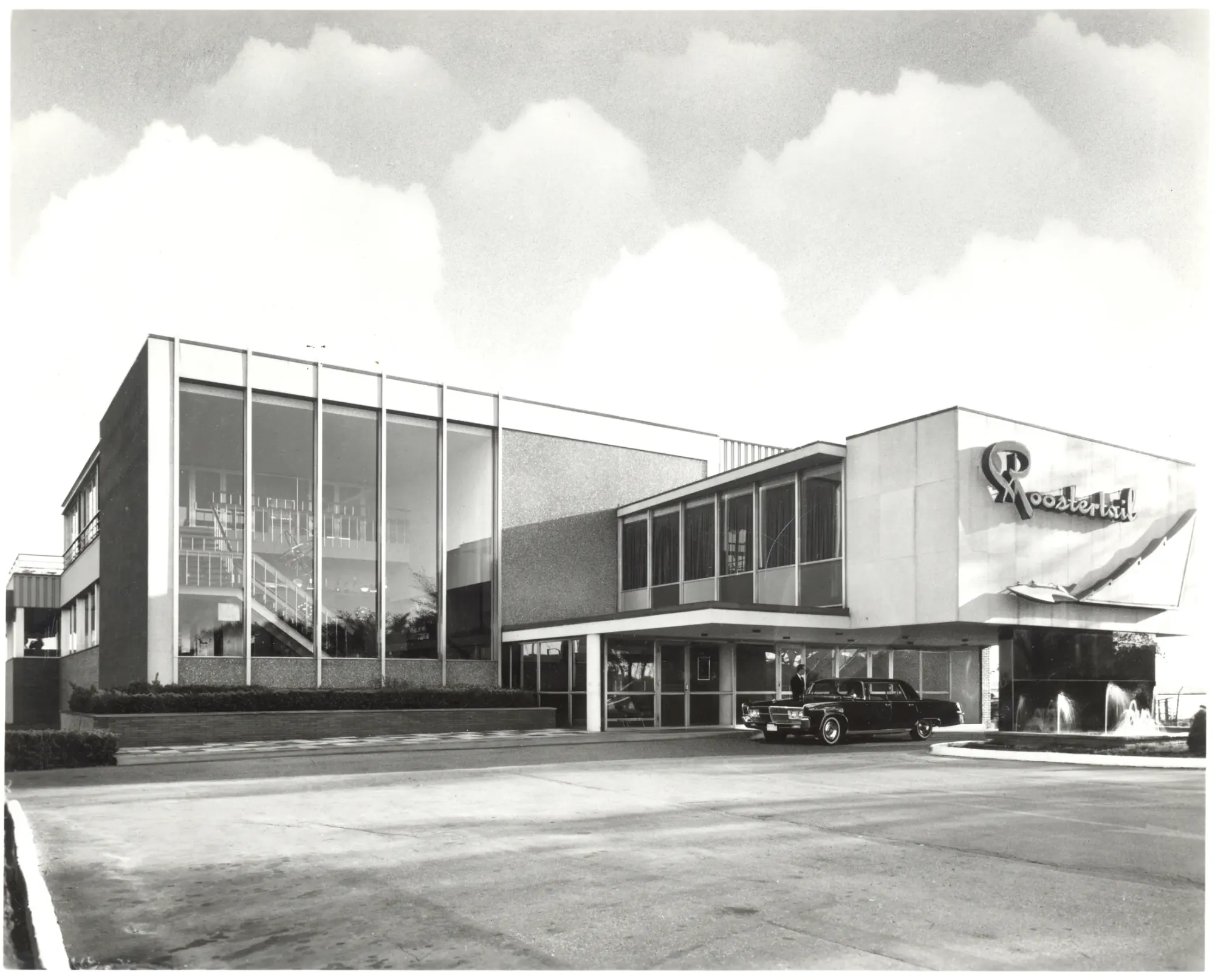
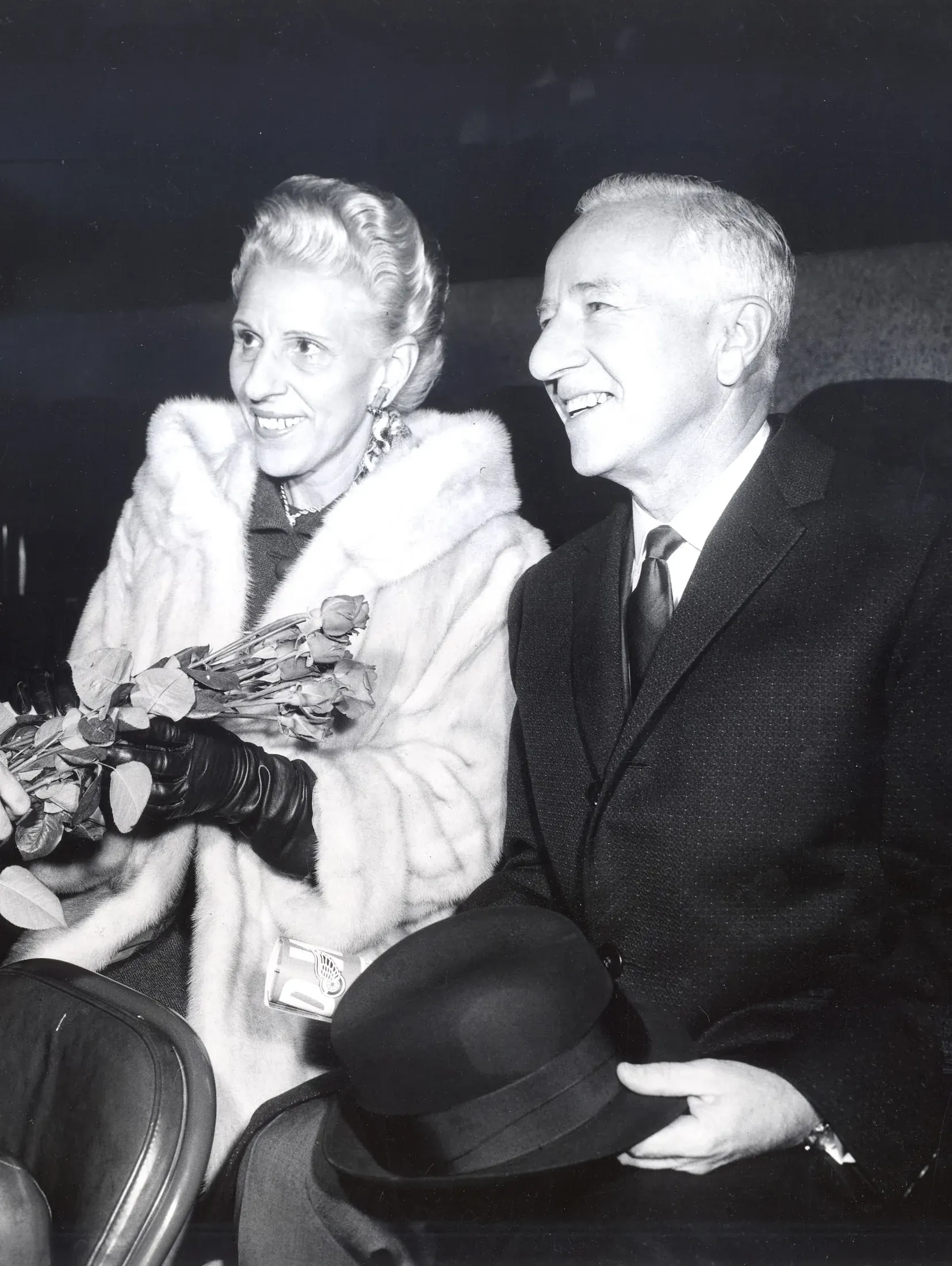
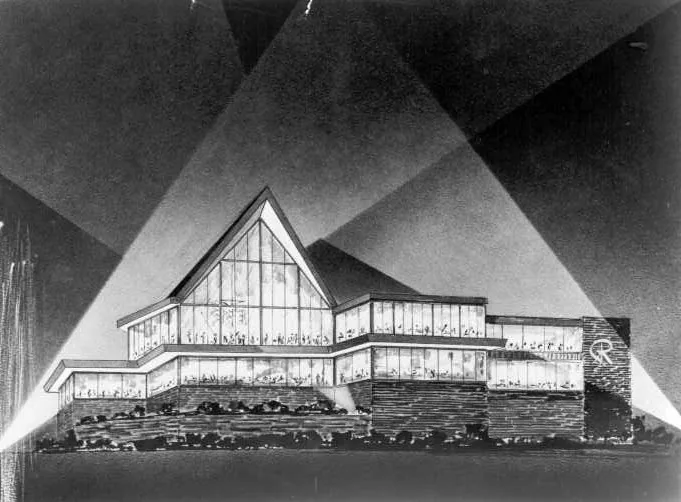
Joe Schoenith hired architect Edward M. Newman in 1957. Newman's site plan is dated that September. The Roostertail script is already inked on it, months before there was a building. Schoenith set the club on the turn of the river where his own boats raced.
The doors opened in 1958. Thousands came in the first few weeks. It has been in the family ever since.
Schoenith family collection
IVTHE SUPPER CLUB
1959
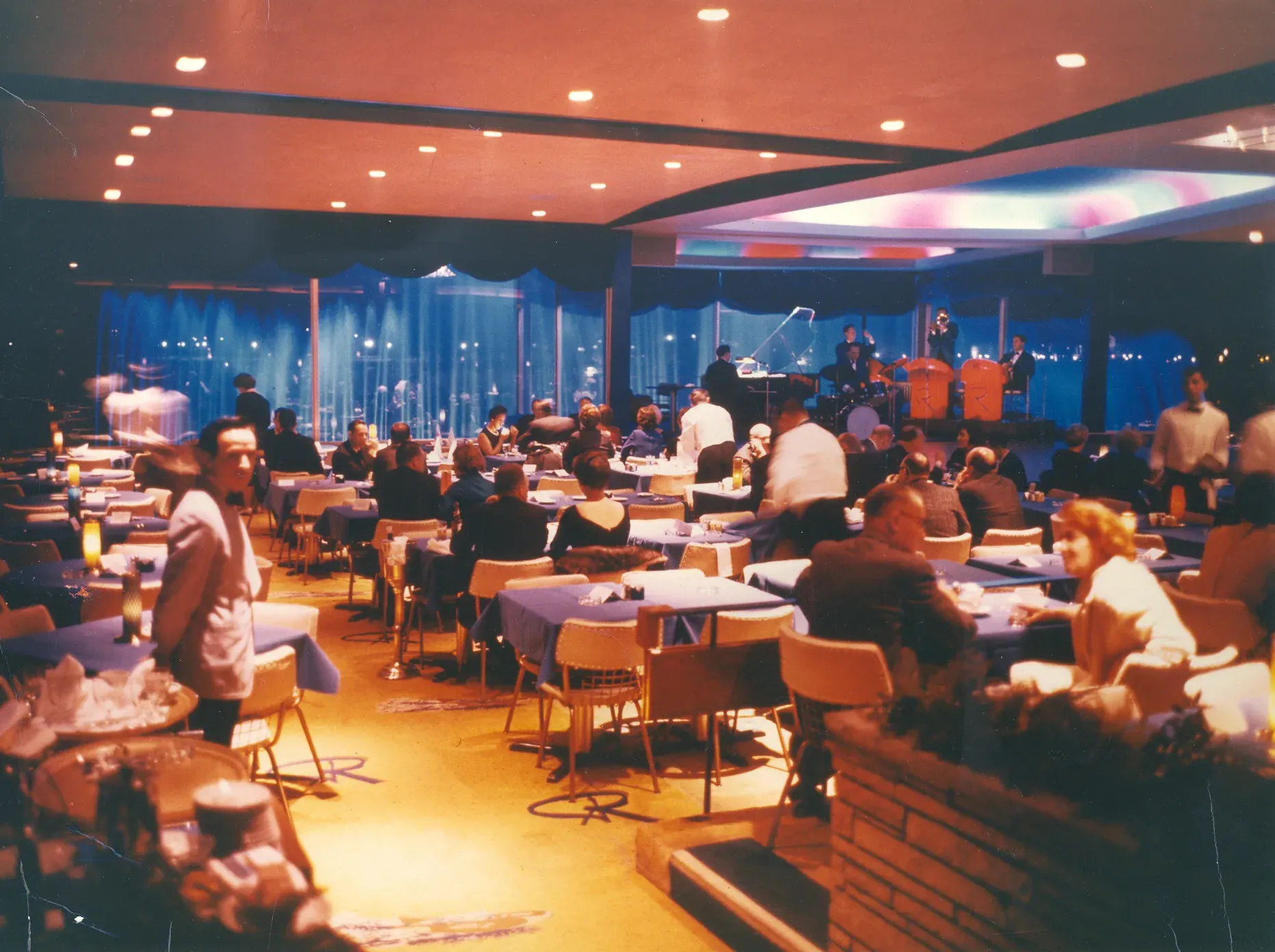
Dinner ran five thirty to nine thirty. Six courses from $3.75. A businessmen's lunch from $1.50. No cover, no minimum. Coat and tie.
You called VAlley 3-2000 for a table, danced to the Joe Banket Trio in the Admirals Club, and watched the marina through the glass. Mondays brought a fashion show. The lobby board advertised outboard motors, too.
Schoenith family collection
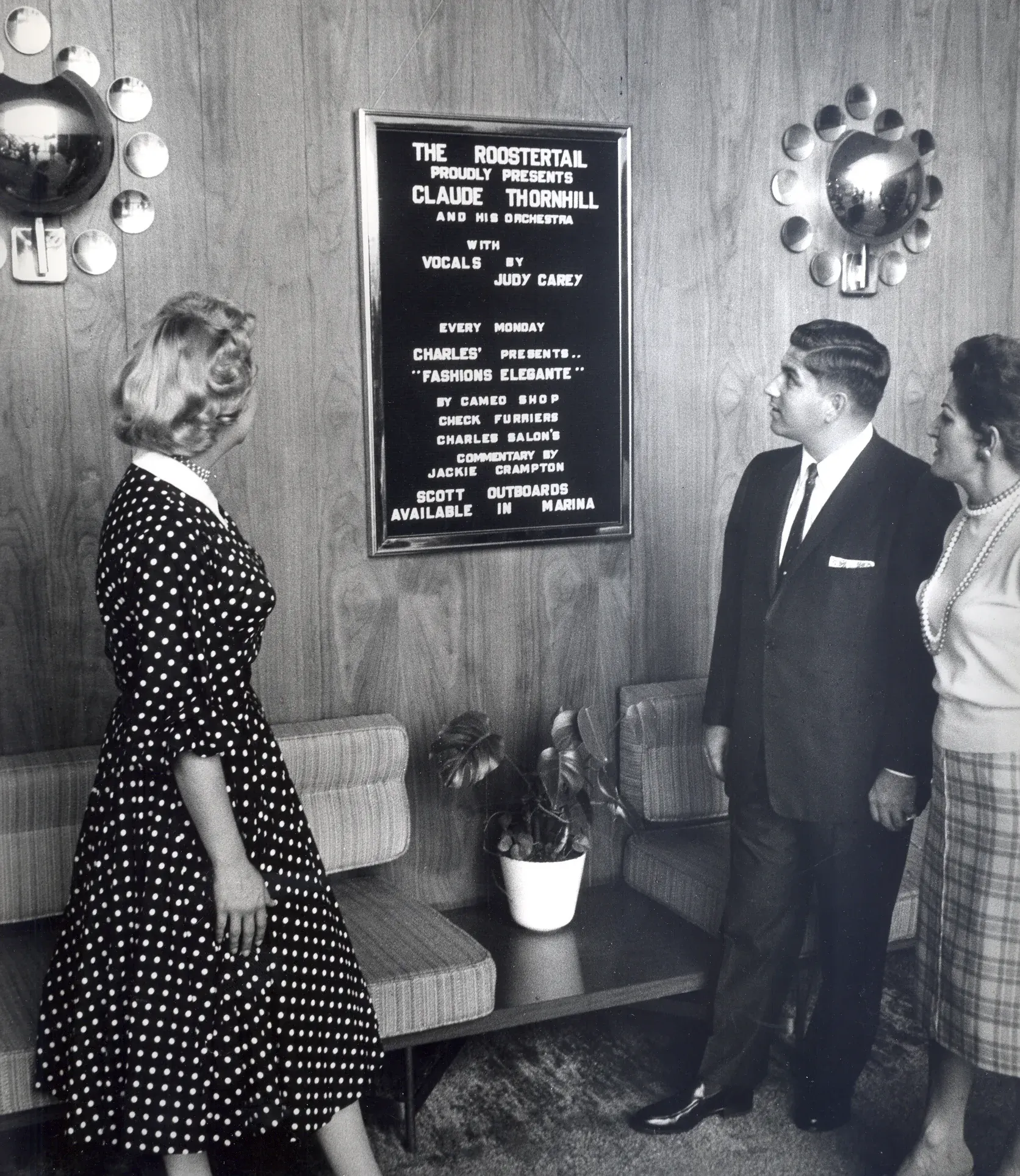
The Roostertail proudly presents Claude Thornhill and his Orchestra, with vocals by Judy Carey.
The lobby board, about 1959
VMOTOWN MONDAYS
1966
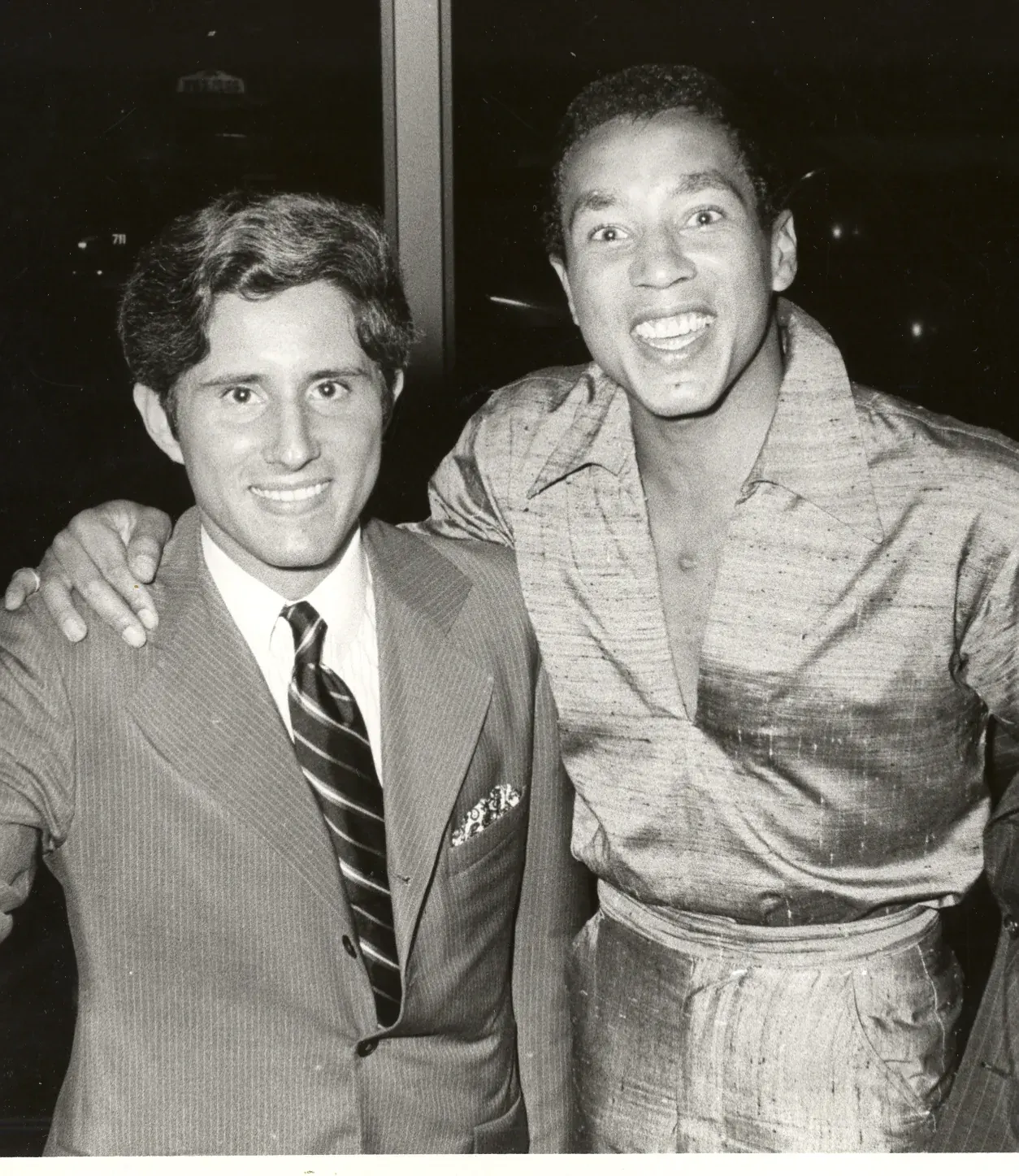
In 1965 the twins, Tom and Jerry Schoenith, built the Upper Deck. A year later they booked seven straight Mondays of Motown into it, opening with the Four Tops on August 22, 1966, and closing with the Temptations. Every set was taped and played back on WKNR the following Saturday night.
They mixed the room on purpose, by race and by age. The family was threatened for it. All seven Mondays ran.
We had threats against our family, we had FBI watching our house…because we [booked] the Supremes.
Tom Schoenith, WDET 101.9 FM, 2016
VILIVE FROM THE ROOSTERTAIL
1966
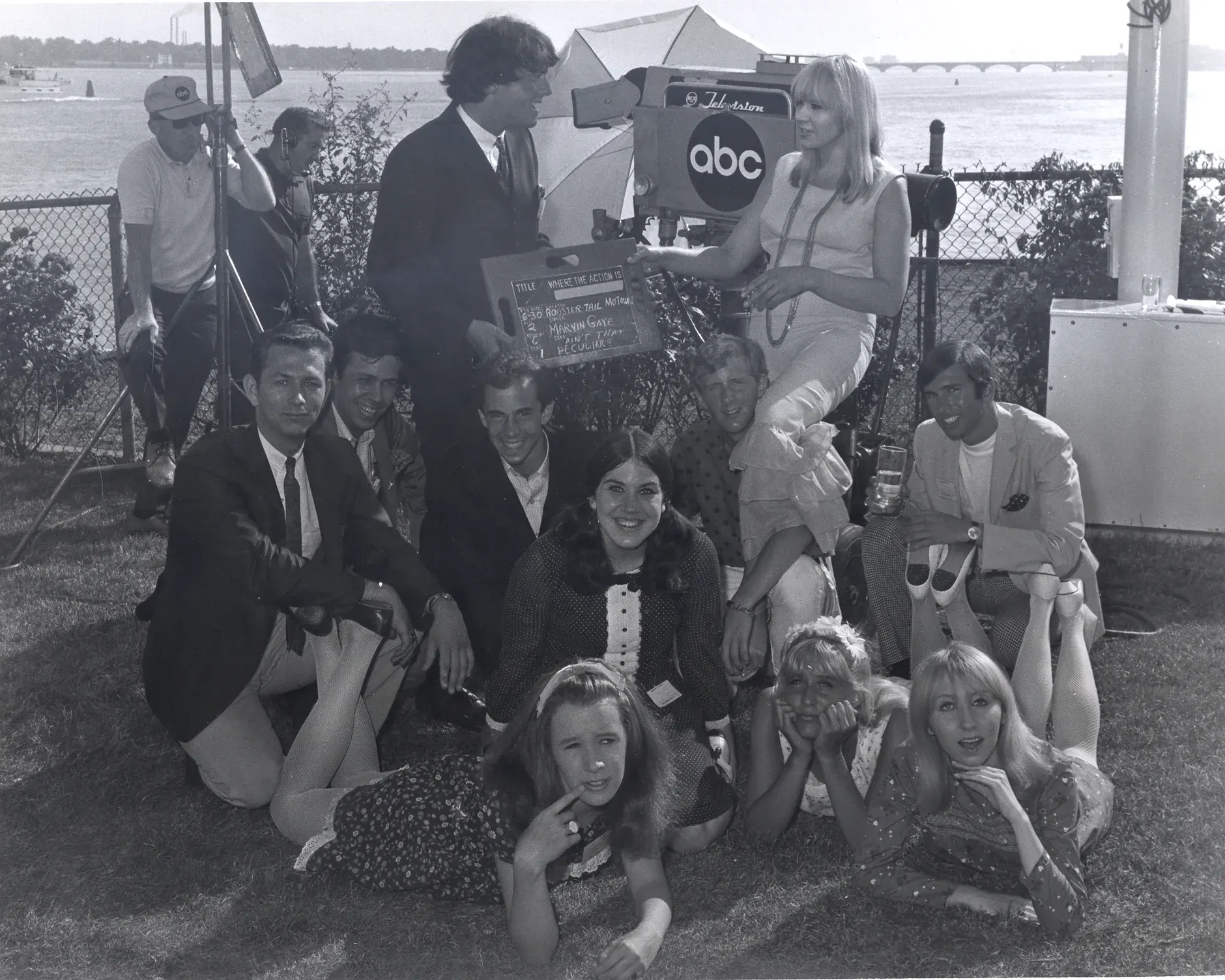
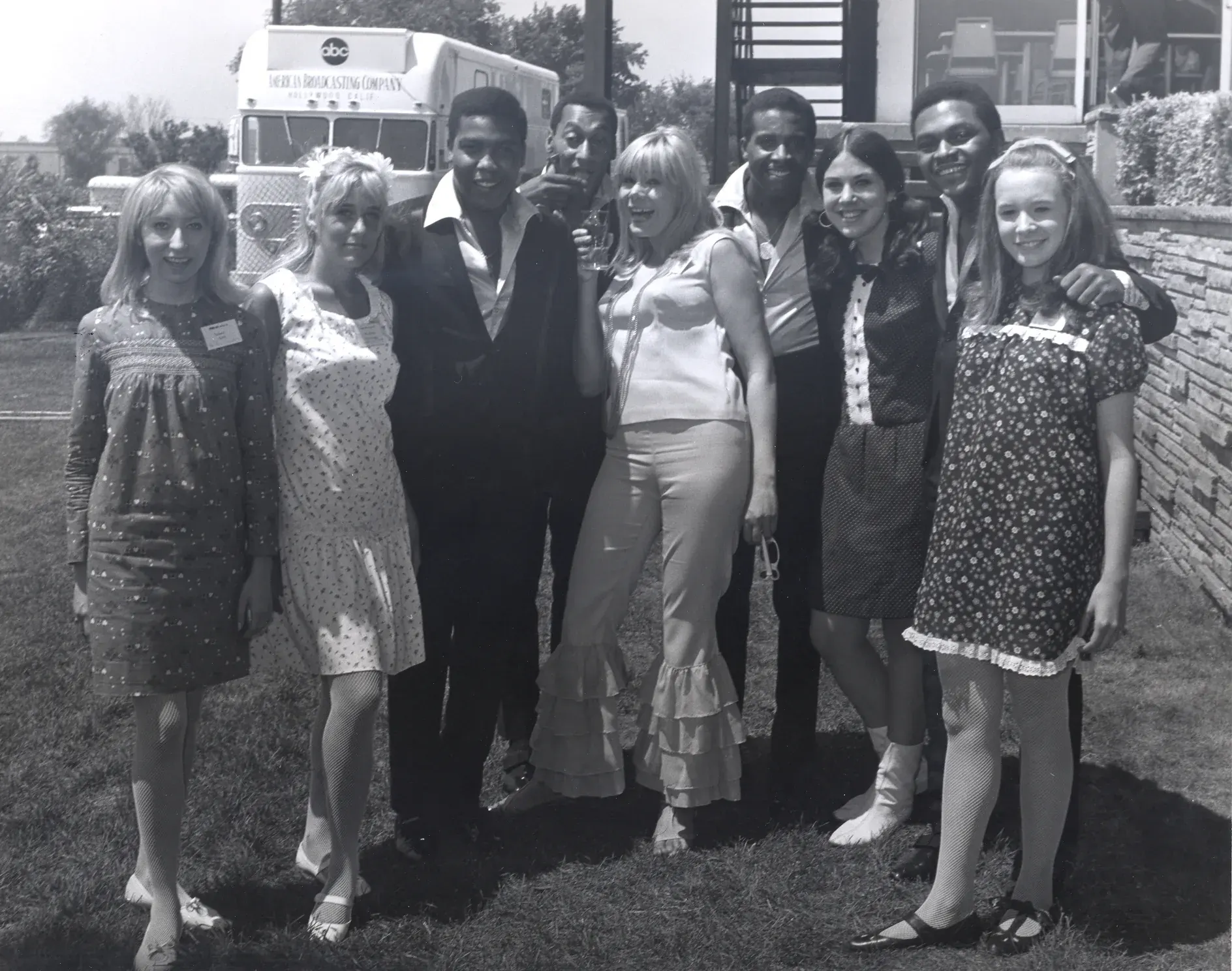
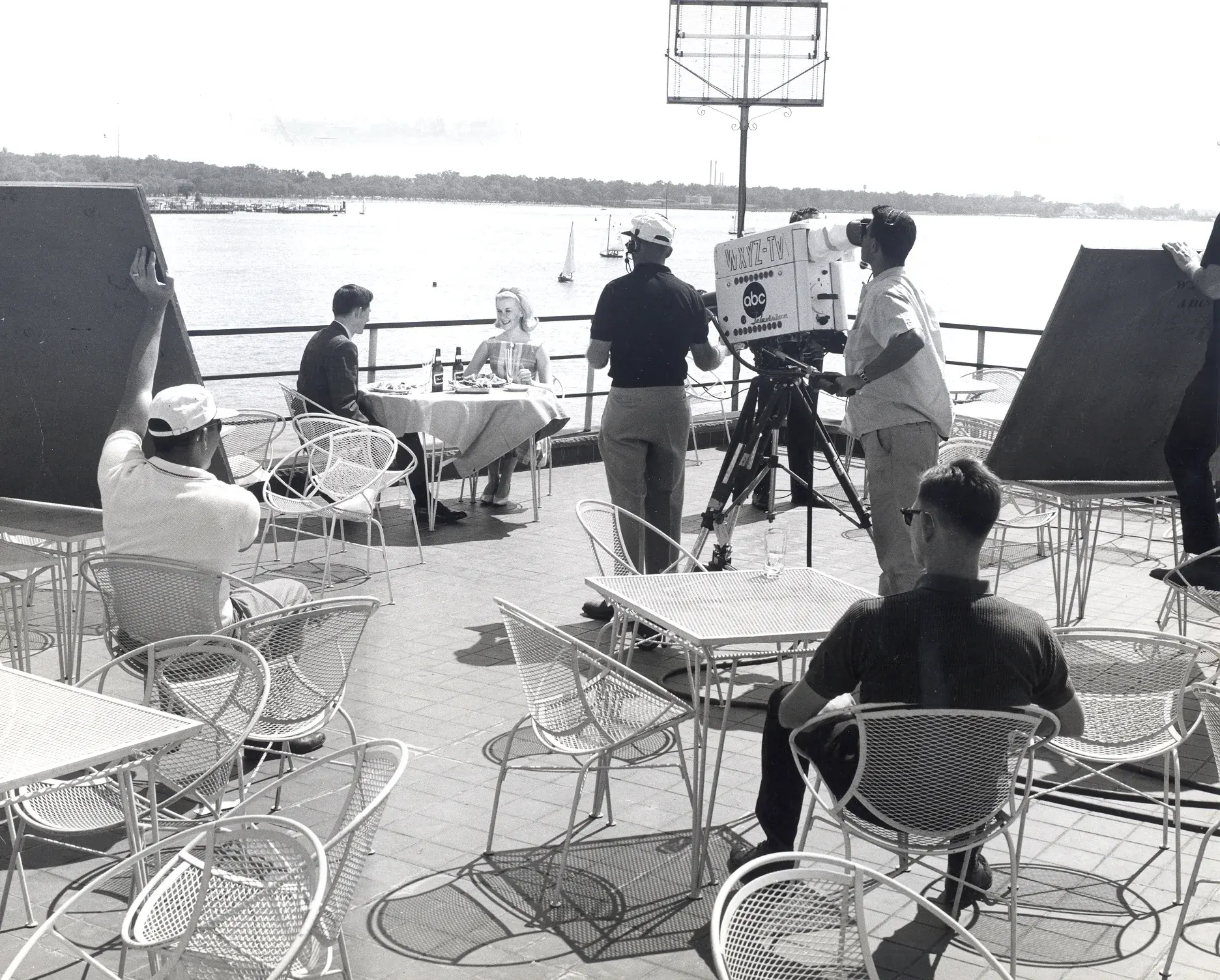
For a few years the tape here was always running. Motown taped seven Monday nights on the Upper Deck in 1966, then put each one back on Detroit radio the following Saturday. That run produced Four Tops Live! and Temptations Live! In November RCA Victor sent George Carlin in for three more.
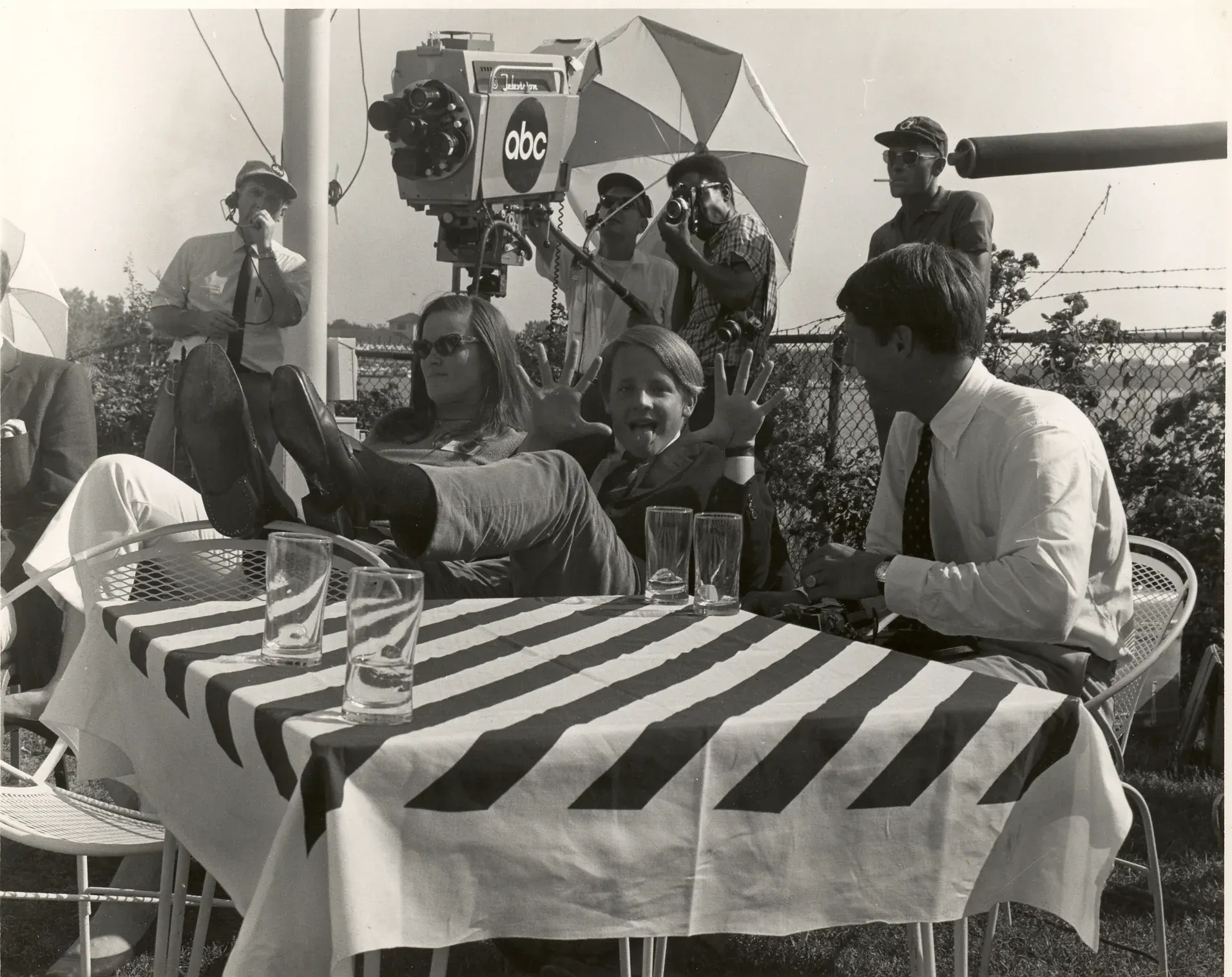
Television crews worked the terrace by the water. Radio went out live from the floor. Nothing here stayed in the room.
Schoenith family collection
Recorded live at Roostertail, Detroit, Michigan.
Cover of George Carlin's Take-Offs and Put-Ons, RCA Victor, 1967
VIITHE NIGHTS THAT WERE OURS
1968
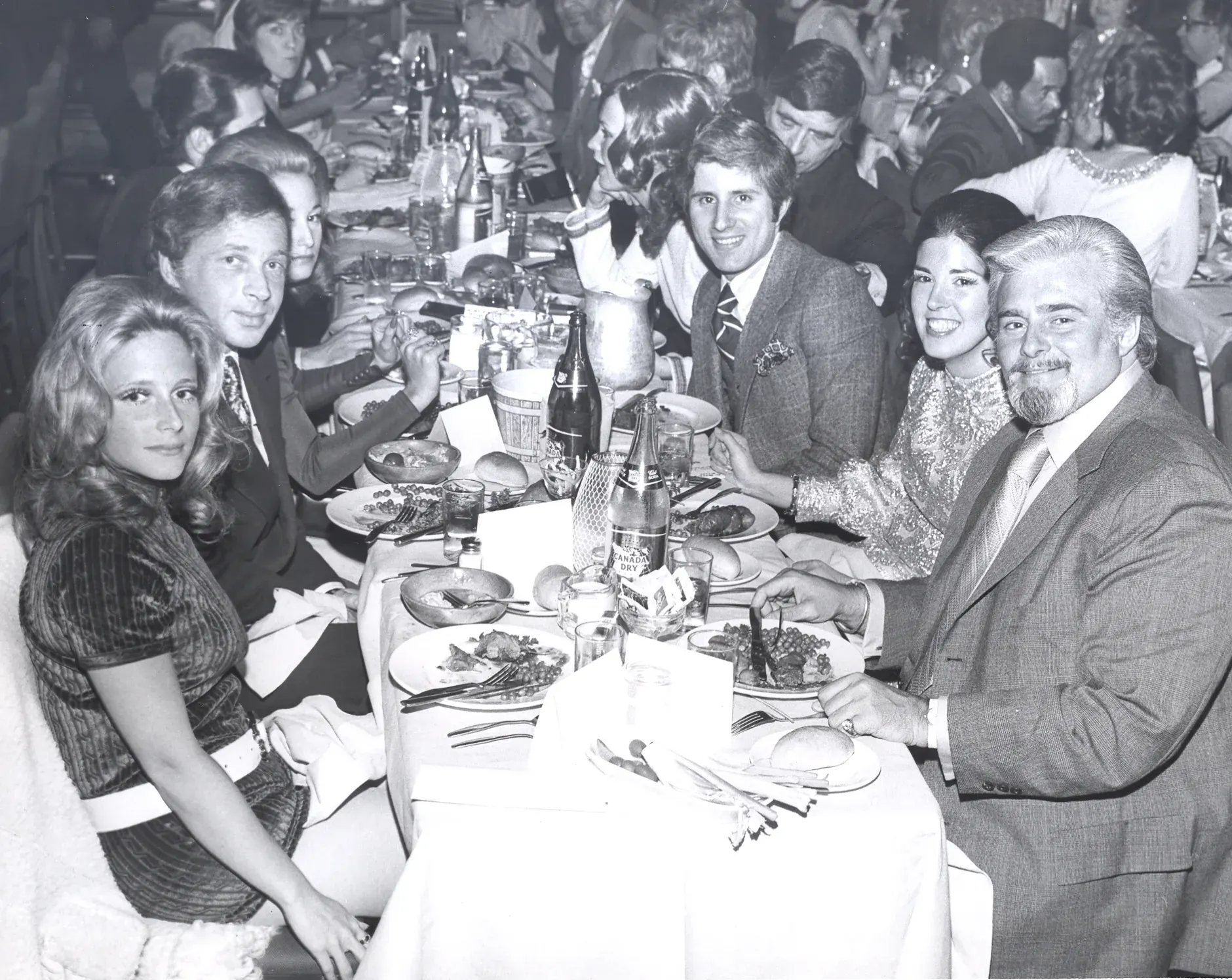
Past the marquee names, the calendar filled with something quieter. Weddings, proms, charity nights, the parties in between. More than seventy weddings a year.
In 2018 the family invited back every couple ever married here. About two hundred came. One family was recognized for four weddings of its own. Tom and Diane Schoenith were married here in 1968. That night, fifty years on, they danced on their own floor for the first time.
Schoenith family collection
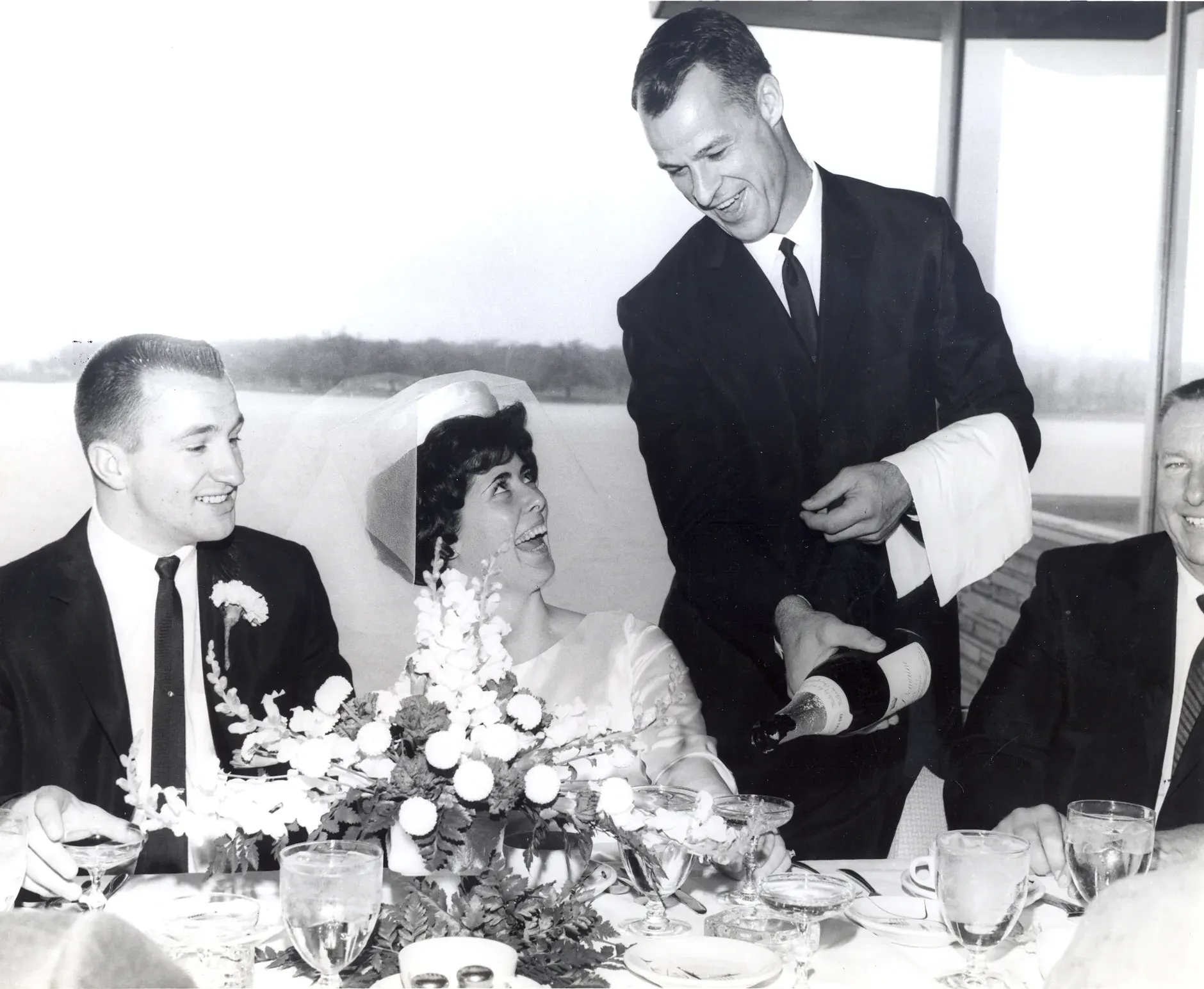
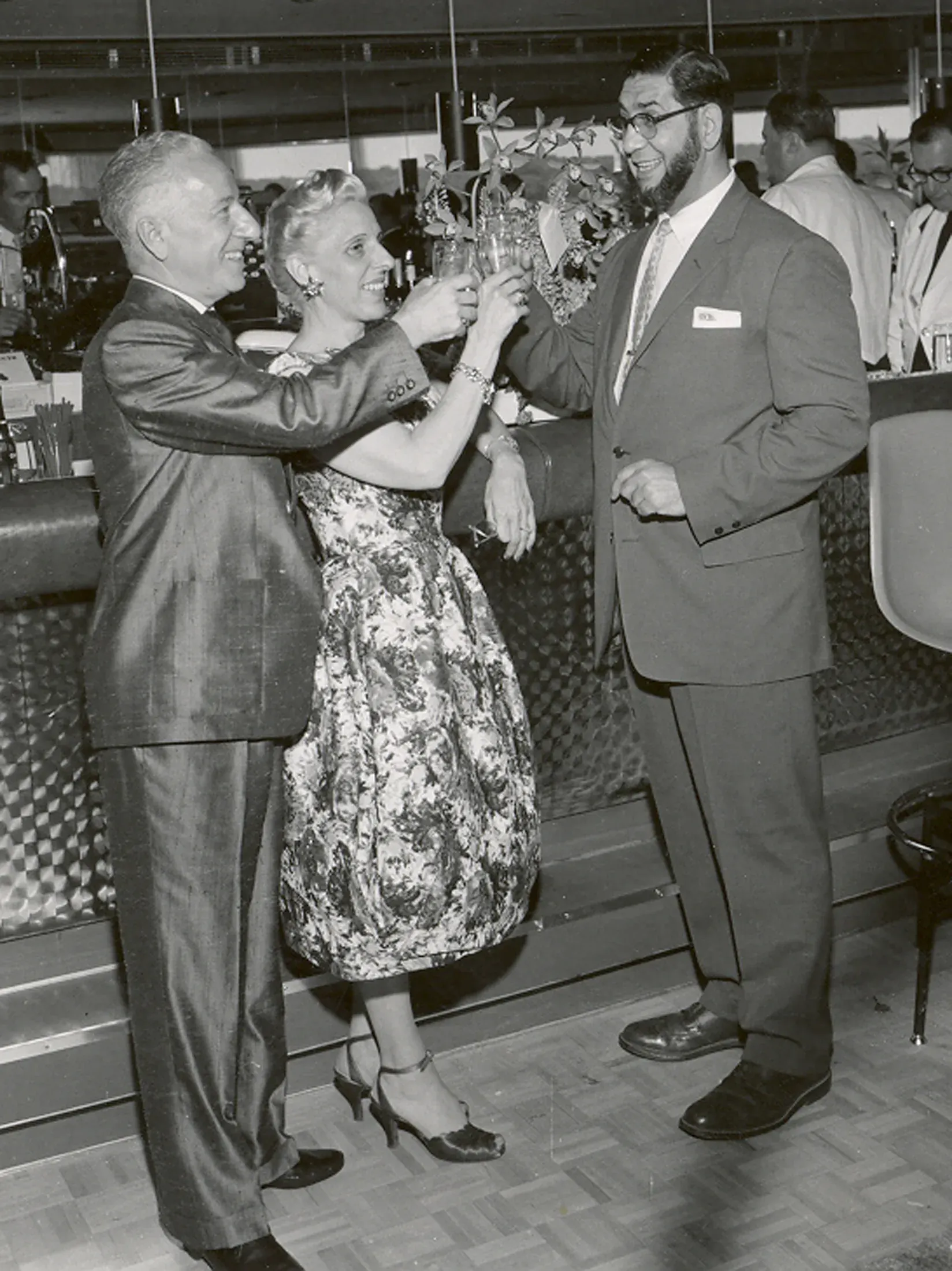
One couple brought the bar bill from their wedding: $7.50. That's something you remember.
Tom Schoenith, 2018
VIIIAND STILL
1958
This is what the fifth anniversary looked like. 1963. Nobody printing it knew whether there would be a tenth. There was. Same river. Same room. Same family since 1958, and a grandson runs it now. Nothing about that was guaranteed. The room still fills. The night still ends. People still take it with them.
Schoenith family collection
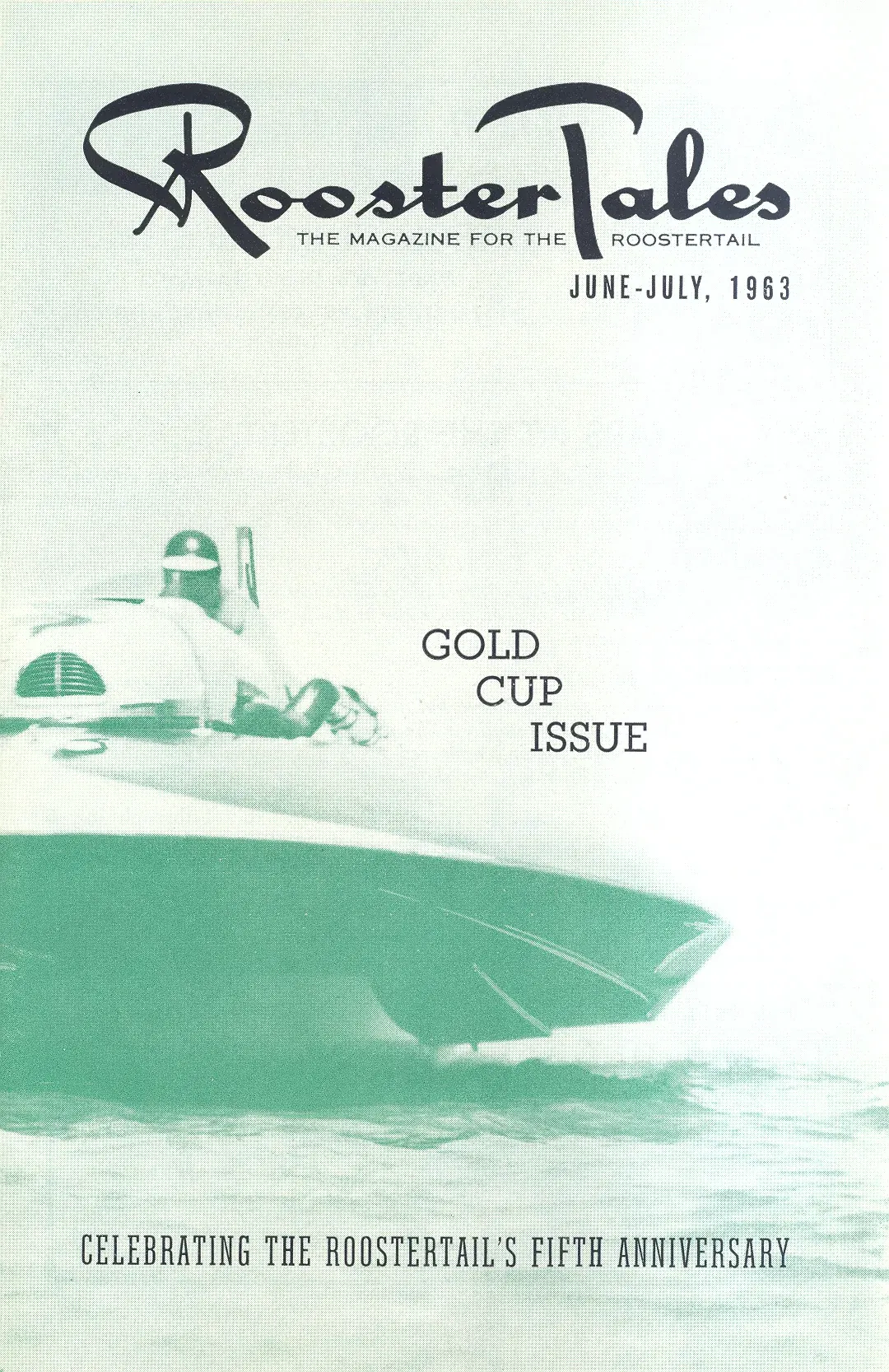
Gold Cup issue. Celebrating the Roostertail's fifth anniversary.
RoosterTales, June 1963
Every chapter above has a full article behind it, with the dates, the sources and the photographs that would not fit.