
THE BOATS1955
Gale Enterprises hydroplane racing: the team behind the Roostertail
Sixteen hulls. Twenty-six seasons. One trophy the scorers had to recount.
Gale Enterprises was the Schoenith family's unlimited hydroplane racing team, named for the Detroit electrical contracting firm Joe Schoenith bought in the 1940s. From 1950 to 1975 it campaigned sixteen hulls across twenty-six seasons, won twenty-seven races and four national championships, and took the APBA Gold Cup twice. The Roostertail is what that racing built.
An electrical contractor bought a race boat
Joe Schoenith made his money in wire and conduit. In the 1940s he bought W. D. Gale, Inc., a Detroit electrical contracting firm, and made the retiring founder a promise: he would never change the company name. He kept it. Then he found a way to make that name travel.
In 1950 he and his twenty-year-old son Lee bought a used hull. It was a 1940-vintage boat that had raced as Miss Frostie and, before that, as Notre Dame. They renamed it Gale, hull number U-50, and entered it for the season. Gene Arena and Lee Schoenith shared the driving that first year.
The logic was plain. An unlimited hydroplane was a rolling advertisement that carried its owner's name into every newspaper on the circuit, and Detroit already had a deep boat racing culture to advertise inside. The Gale name stayed on the water for the next twenty-six years.
Sixteen hulls, twenty-six seasons, twenty-seven wins
Between 1950 and 1975 Gale Enterprises campaigned sixteen different unlimited hydroplanes. The team won twenty-seven races and four national championships. Lee Schoenith took the national high point driving title three years running, in 1953, 1954 and 1955, and was national high point owner in 1953, 1954, 1955 and again in 1972.
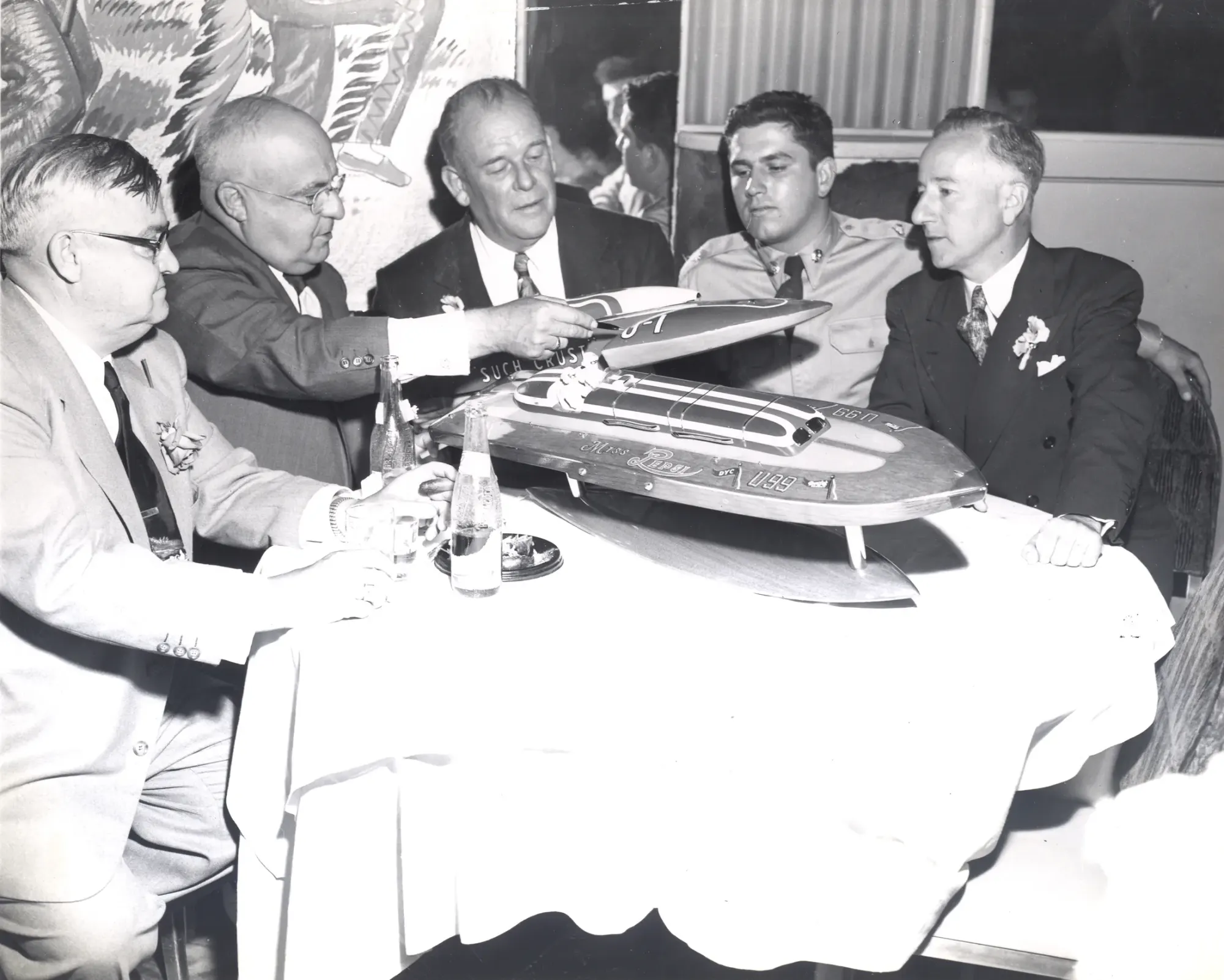
The peak of it was a two-boat team. In 1954 the Michigan designer Les Staudacher built Gale IV, hull U-54, and Gale V, hull U-55. Bill Cantrell, known on the circuit as Wild Bill, drove the U-54. Lee drove the U-55, a twenty-nine foot Allison-powered hull. The two boats carried their rudders on opposite sides of the stern, and Gale V was reportedly the first unlimited built with its rudder on the left.
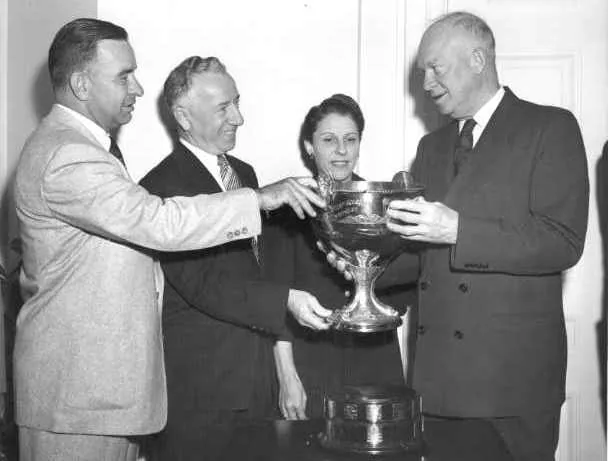
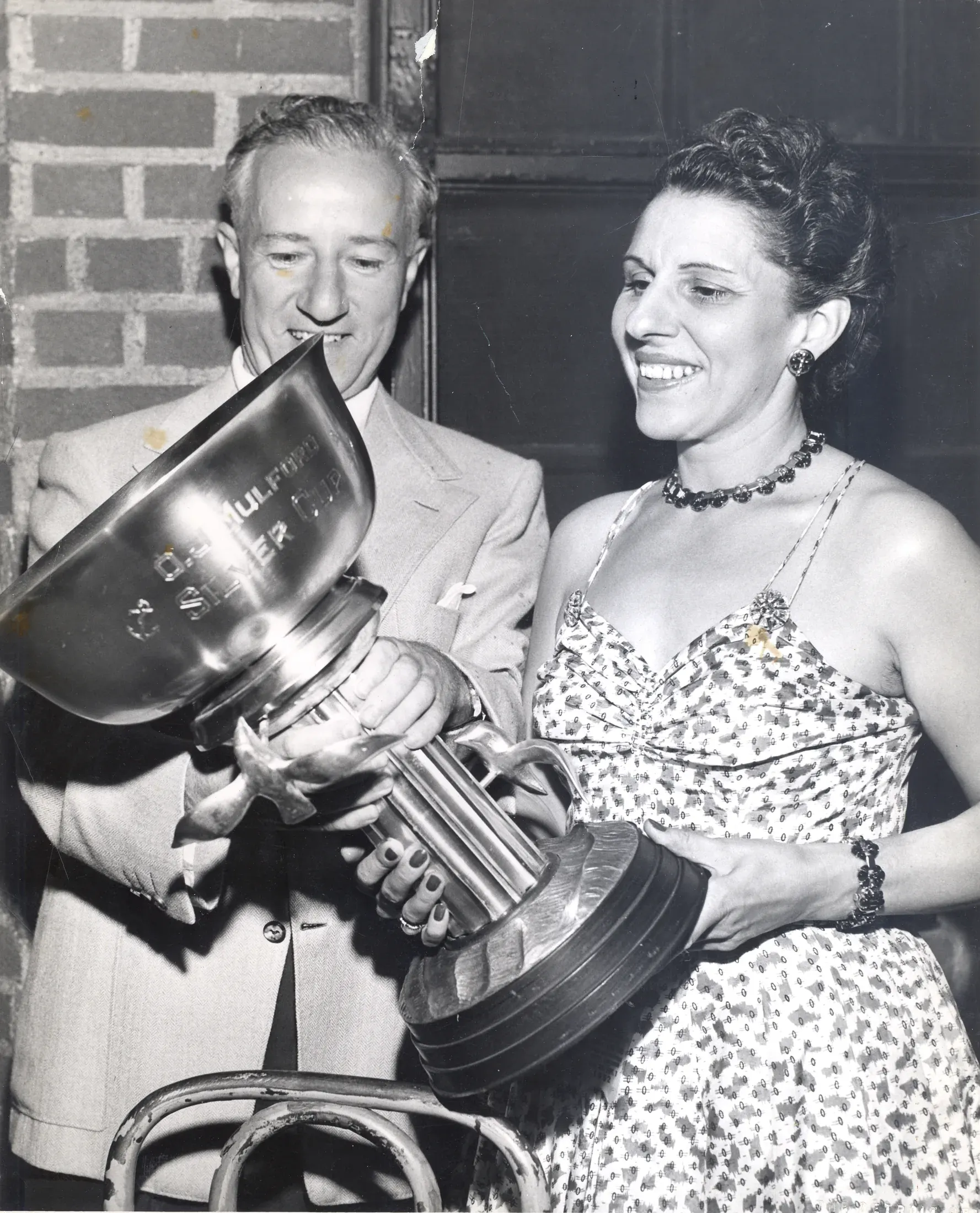
That season produced the family's most photographed moment and one of its worst. After Gale IV won on the Potomac River, President Eisenhower presented the President's Cup to Bill Cantrell and to Joe and Millie Schoenith at the White House. In the same season, at the Gold Cup near Seattle, Cantrell lost steering in that boat and put it into a spectator's rose garden.
The 1955 Gold Cup was won without winning a heat
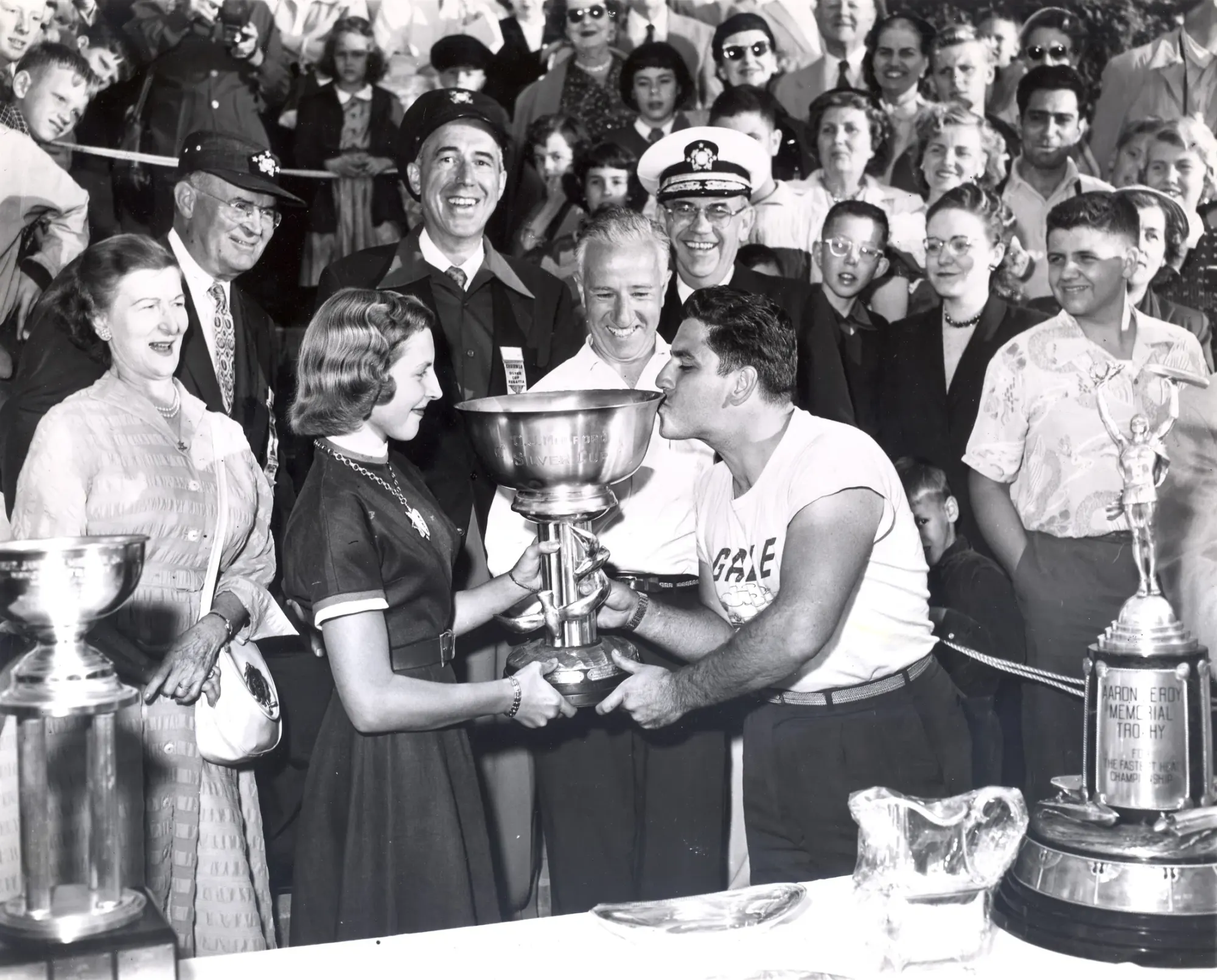
On August 7, 1955, Lee Schoenith took Gale V to Lake Washington in Seattle for the APBA Gold Cup and did not win a single heat all day. He won the Cup anyway.
Gold Cup scoring carried a bonus for the fastest aggregate race speed. Gale V was consistent where its rivals were quick, and over ninety miles its total elapsed time came in 4.536 seconds ahead of Bill Muncey in Miss Thriftway. Final points were 1,225 to 1,025. It was the first time since the bonus point system was introduced in 1937 that any boat had taken the Gold Cup without winning a heat.
The result ended Seattle's five-year hold on the trophy. Under the custom of the era the winner's home water hosted the next running, so the Gold Cup came to the Detroit River to be defended in 1956. Three years after that, Joe Schoenith opened the Roostertail on the racecourse itself.
The result Joe Schoenith would not call official
Nobody in Seattle was in a hurry to announce it. Joe Schoenith walked to the judges' stand with a stopwatch in his hand and told the officials, "I believe we've won this race!" The chief scorer told him the numbers were still being recalculated.
The Cup reached the Schoeniths' hotel room about three hours later. Even then Joe would not treat it as settled. It was the next morning, with the trophy in front of him, that he said the line the family still repeats.
The dispute is part of why the win mattered. A heat victory is a photograph. A four and a half second margin accumulated across ninety miles of racing is an argument, and Gale Enterprises won the argument.
Now I know it is official.
Joe Schoenith, the morning after the 1955 Gold Cup
The driver who rewrote the rulebook
Lee Schoenith stopped driving in 1958. His back had gone, and one account ties the injury to a flip in the Gale VI. He was not finished with the sport.
That same year he chaired the committee that created the Unlimited Racing Commission, pulling unlimited hydroplane racing out from under the APBA's inboard rules commission so the class could govern itself. Then he ran it. He was APBA Assistant Commissioner from 1958 to 1961, Unlimited Commissioner from 1962 to 1969, a job the sport nicknamed the Czar, and Chief Referee for the unlimiteds from 1980 to 1987.
As commissioner he made prize money mandatory, put the Gold Cup out to competitive bid among host cities, and standardized the rules across the circuit. He was never president of the APBA. That title gets attached to him in secondhand accounts and no record supports it.
His father worked the same problem from the other side. When the city's major yacht clubs pulled out of the sport around 1961, Joe Schoenith co-founded the Spirit of Detroit Association to keep unlimited racing on the river. Its Gold Cup regattas are the direct ancestor of Detroit's hydroplane racing today.
I argued. I fought. I yelled. I admit it. But we got our new Unlimited Racing Commission.
Lee Schoenith, on founding the Unlimited Racing Commission
Smirnoff, Myr, Atlas, and a hull named Roostertail
In the early 1960s the tax code ended the arrangement that had made the whole thing work. Joe Schoenith lost a case over deducting the boats as advertising for W. D. Gale, so the hulls had to carry outside sponsors. Gale Enterprises still owned them and still fielded them. Only the paint changed.
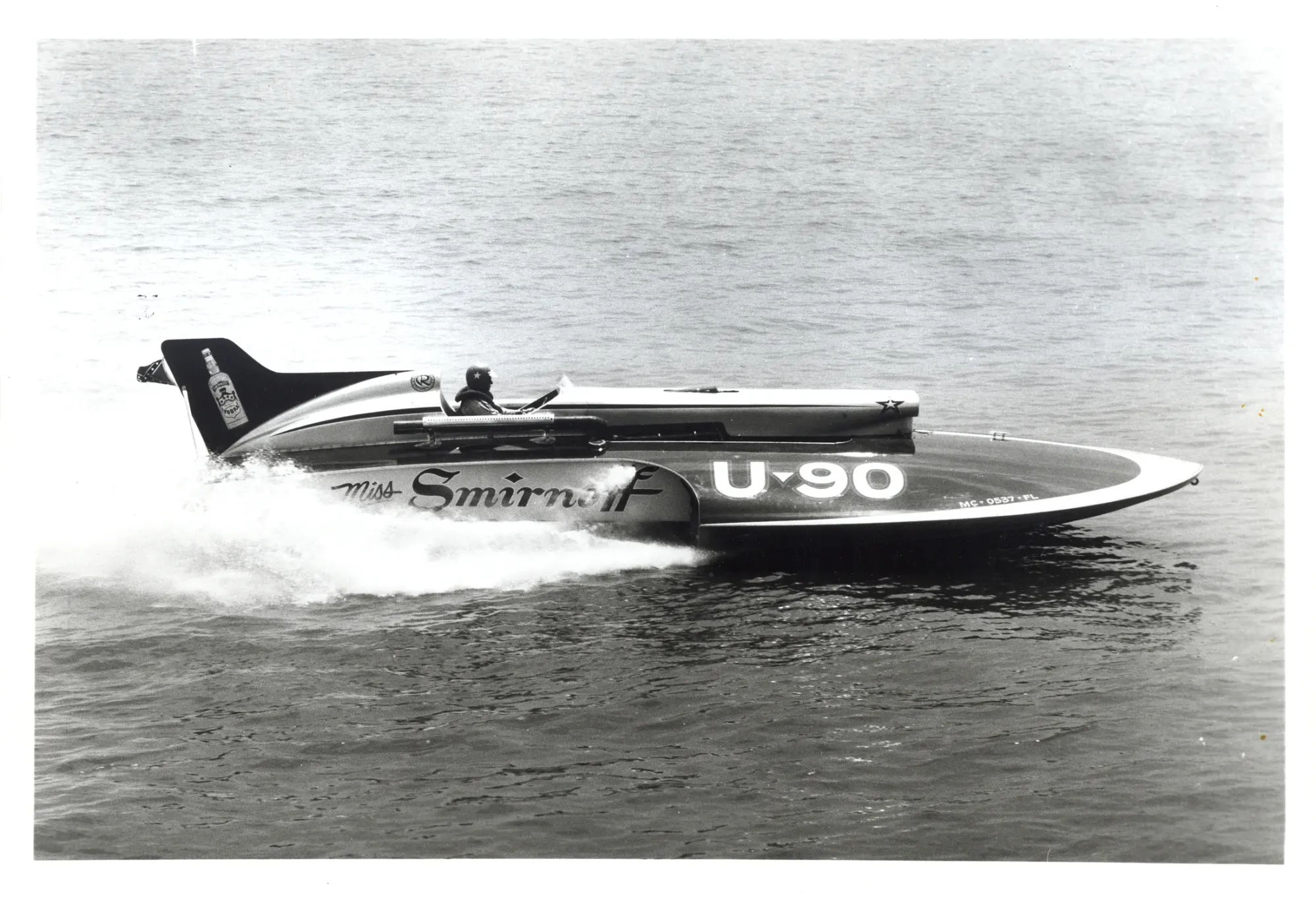
Between 1964 and 1968 the team built three Miss Smirnoff hydroplanes for Heublein. Bill Cantrell drove the 1964 U-90 to the President's Cup in Washington. The 1966 U-80 crashed fatally in heat 3-A with Chuck Thompson driving, and the sponsorship moved to the sister hull, the U-44, for the rest of that season. The 1968 Smirnoff was the first unlimited hydroplane ever built with a pickle-fork bow, and Dean Chenoweth took it to third in the Gold Cup at Detroit.
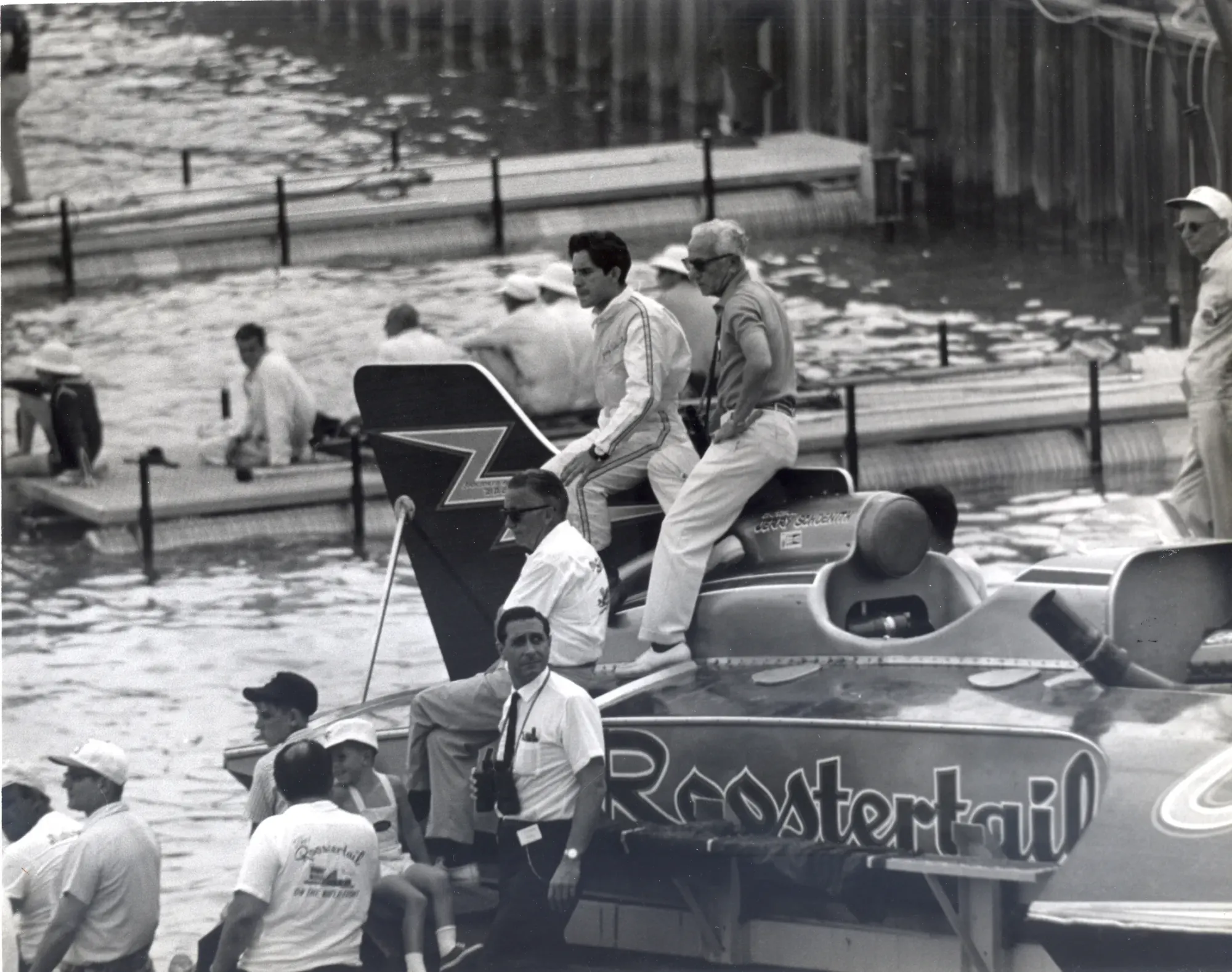
The U-44 raced under the name Gale's Roostertail. That same lineage of hulls ran through Myr's Special in 1969, Myr Sheet Metal in 1970, Atlas Van Lines II in 1971 and back to Gale's Roostertail in 1973 and 1974, eight sponsor names on one boat. Cantrell's last race, the 1968 Diamond Cup at Coeur d'Alene, came as relief driver for Jerry Schoenith in that hull.
Bill Muncey, Atlas Van Lines and the 1972 Gold Cup
Bill Muncey was the driver Gale V had beaten in 1955. From 1970 to 1975 he drove for Lee Schoenith under Atlas Van Lines sponsorship, and in 1972 he gave the team its best season: six wins in seven races, the national championship, and the Gold Cup at Detroit. Gale Enterprises broke one engine all year, a Rolls-Royce Merlin.
Then it stopped. A thirty-race losing streak followed. In 1975 Joe Schoenith retired from ownership after twenty-five years in the sport, and Muncey started his own team the following season. Joe and Millie moved to Florida. Lee died in 1993, Joe in 1996 at ninety-five.
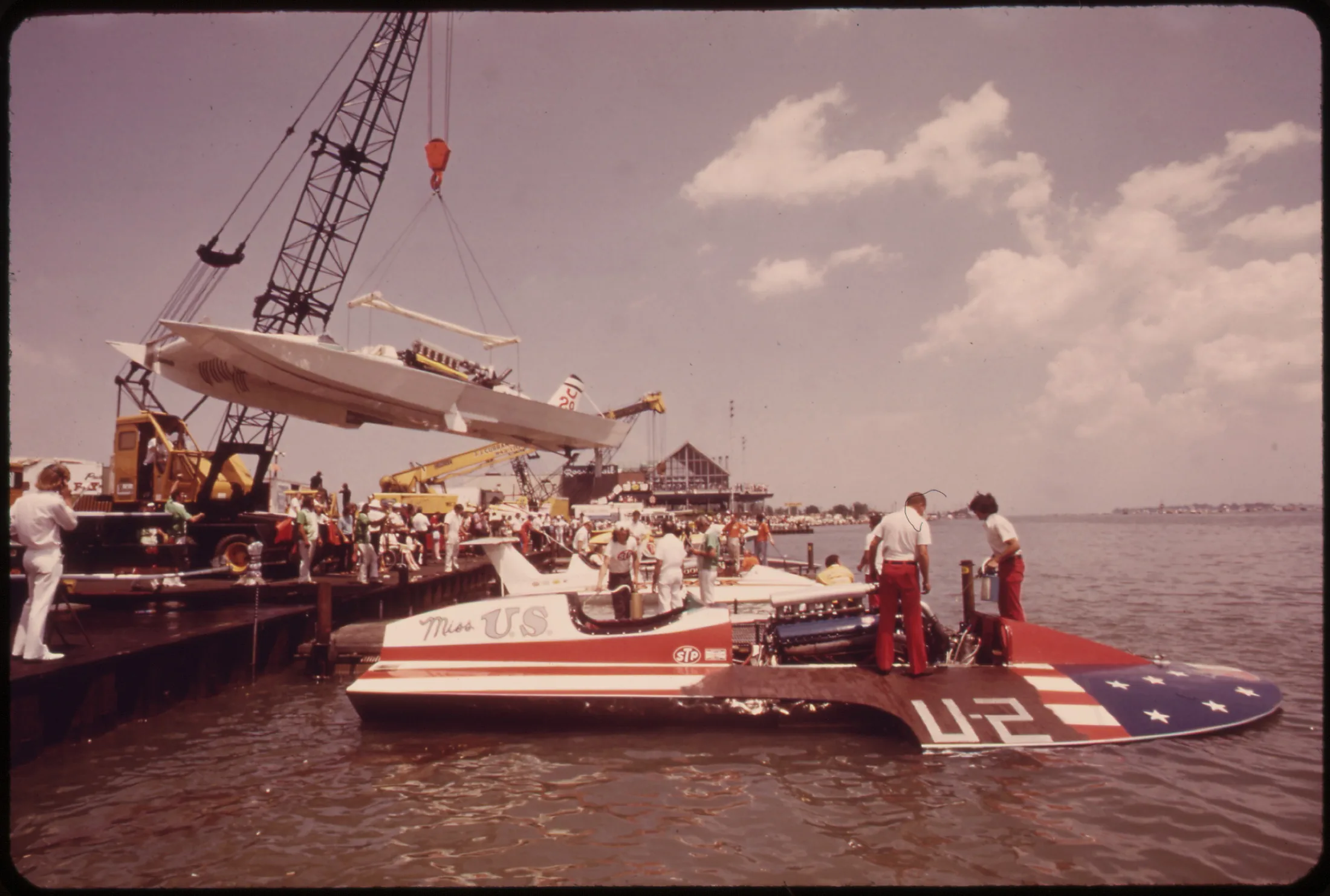
The racing stayed. The Roostertail was built in 1958 on the south turn of the Detroit River course, the fastest corner in Gold Cup racing, and that turn carries the building's name. Half a million people once filled the riverbank on race day. A 1968 photograph in the Detroit Historical Society's collection shows the Gold Cup pits staged at the foot of Marquette Drive with the club standing behind them, and a 1973 frame from the National Archives shows the same view. The plume a hydroplane throws off its stern at speed is called a rooster tail. That is where the name came from, and the boats came first.
Questions people ask
- What was Gale Enterprises hydroplane racing?
- Gale Enterprises was the Schoenith family's unlimited hydroplane racing team, based in Detroit and named after W. D. Gale, Inc., the electrical contracting firm Joe Schoenith bought in the 1940s. It campaigned sixteen different hulls over twenty-six seasons, from 1950 to 1975. The team won twenty-seven races and four national championships.
- How did Lee Schoenith win the 1955 Gold Cup without winning a heat?
- The APBA Gold Cup awarded bonus points for the fastest aggregate race speed alongside points for heat finishes. Driving Gale V on Lake Washington at Seattle on August 7, 1955, Lee Schoenith finished 4.536 seconds ahead of Bill Muncey's Miss Thriftway on total elapsed time over ninety miles, scoring 1,225 points to 1,025. It was the first Gold Cup taken on the speed bonus without a heat win since the bonus system began in 1937.
- What was the Gale V hydroplane?
- Gale V, hull number U-55, was a twenty-nine foot Allison-powered unlimited hydroplane built in 1954 by the Michigan designer Les Staudacher for Joe Schoenith's Gale Enterprises. Lee Schoenith drove it to the 1955 APBA Gold Cup and to national high point championships in 1954 and 1955. Its rudder sat on the left side of the stern, reportedly the first unlimited built that way.
- Was Lee Schoenith president of the APBA?
- No. His documented roles were APBA Assistant Commissioner from 1958 to 1961, Unlimited Commissioner from 1962 to 1969, and Chief Referee for the unlimiteds from 1980 to 1987. The claim that he was APBA president appears in secondhand accounts and is not supported by any record in the sources listed here.
- Why did the Gale boats start racing under names like Smirnoff and Atlas Van Lines?
- In the early 1960s Joe Schoenith lost a tax case over deducting the race boats as advertising for W. D. Gale, Inc. From then on the hulls carried outside sponsors, including Miss Smirnoff, Myr Sheet Metal, Towne Club Beverages and Atlas Van Lines, while Gale Enterprises continued to own and field them. One hull raced under the name Gale's Roostertail, after the family's riverfront club.
- How far back does Detroit River Gold Cup racing go?
- Detroit's Gold Cup history predates the Schoenith family by decades. The community-owned Miss Detroit won the 1915 Gold Cup at Manhasset Bay in New York, which earned Detroit the right to host the 1916 race on the Detroit River. Gar Wood then won five straight Detroit River Gold Cups between 1917 and 1921.