

THE BUILDING2026
Historic event venues in Detroit: what a room with 68 years behind it gets you
The stage is original. Whether the rest still works is the question to ask.
Historic event venues in Detroit sell a feeling, but the room still has to hold your guests, feed them and get them home. The Roostertail has stood on the Detroit River since 1958, with a stage where Motown acts once played and a dance floor from 1961 that still rises on command. Here is what that kind of history actually buys you, and what to ask before you book a room like it.
What historic event venues in Detroit actually offer
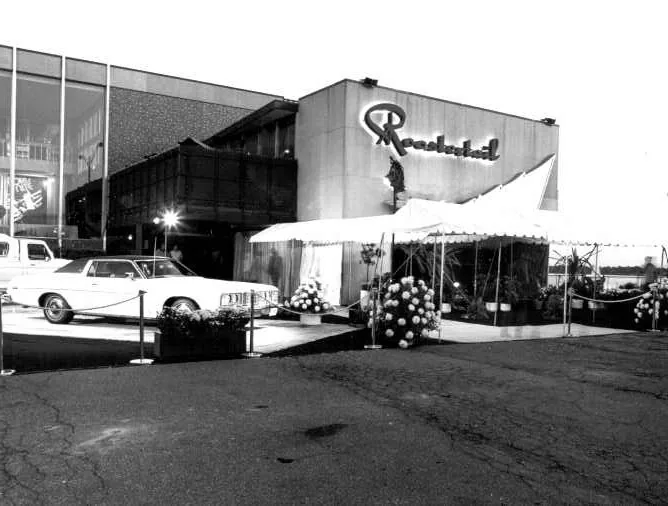
A historic event venue in Detroit offers a room you can point to and say something happened here, not just a lobby full of framed photographs. The Roostertail opened on the Detroit River in 1958, on the same turn of water where the Schoenith family's Gale hydroplanes raced, and 2026 is its 68th year in the same building.
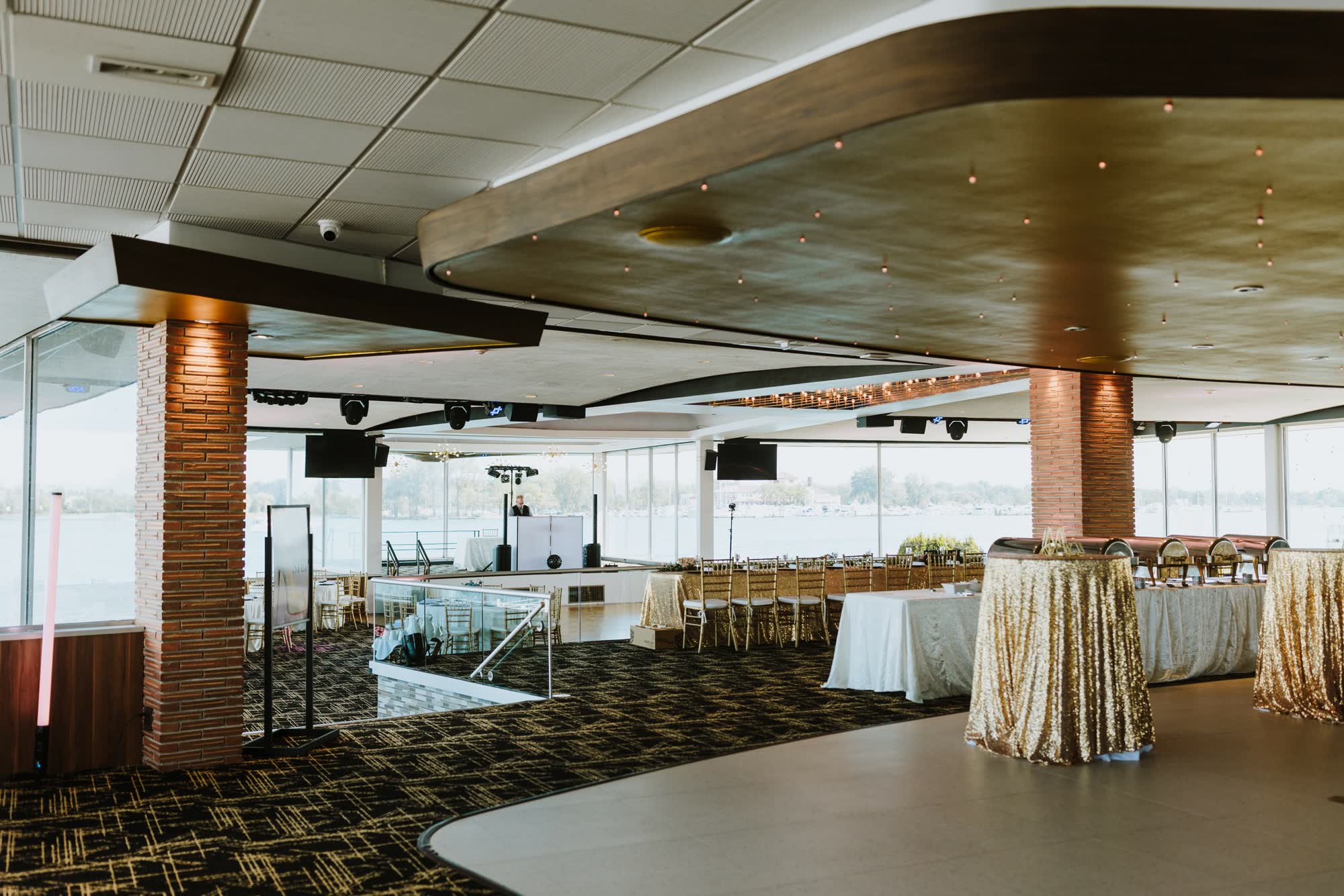
That kind of age only matters if the building still does its job. The Marine Room's hydraulic dance floor went in in 1961 and still rises to table height at the push of a button. The stage behind it is the same stage Motown acts performed on. Neither one is roped off. Both get used on an ordinary Saturday.
That is the real test for a historic room, anywhere. Not whether it looks old in photographs, but whether the old parts of it still run the modern event you are paying for.
Ask whether the original features still work, not just still exist
The first question for any vintage venue in Detroit is simple: is the historic feature functional or decorative. A lot of old buildings keep a fixture for the story and quietly stopped using it years ago.
In the Marine Room, the hydraulic rising dance floor installed in 1961 is still part of a working night, not a museum piece. The original stage where Motown acts performed is the same stage a band or a DJ sets up on now. The fountains outside the room are lit after dark.
Ask the venue directly which historic elements you can actually use on your date, versus which ones you will only see from across the room. If a coordinator cannot answer that in one sentence, the feature probably is not part of the working building anymore.
Ask what the old rooms hold now
History does not answer the guest count question, so ask it separately. A room can be original to a 1958 building and still be sized completely differently than you expect.
The Marine Room, the historic room with the rising floor and the original stage, holds up to 300 guests across 4,500 square feet, with glass on three sides at water level. The Palm River Room upstairs is the newer, brighter space: up to 800 guests across 5,500 square feet, with floor to ceiling glass the full length of the wall. The Club, the intimate option, holds up to 55 in 1,200 square feet.
That range matters more than the building's age. See the full breakdown of all three rooms before you fall for one room's history and find out later it seats half your list, or walk through the Marine Room's own page if the historic room is the one you are picturing.
Ask about the kitchen and bar behind the history
An old building does not tell you anything about how you will be fed. Ask directly whether the venue runs its own kitchen and bar, or whether you will be bringing in outside vendors to fill in the gaps.
The Roostertail runs an in-house executive chef and a full in-house bar program. Everything served comes out of the venue's own kitchen, and the bar is staffed by the venue itself, including the private cocktail-hour bar in the Palm River Room where guests do not queue behind another event.
A building's age says nothing about its plumbing, its walk-in coolers or its liquor license. Those get updated over the decades while the stage and the dance floor stay the same. Ask about both halves before you assume a historic room means a dated kitchen.
Ask about parking and accessibility, not just the view
Two practical questions get skipped in every tour that leads with history: where does everyone park, and how does everyone actually get into the building.
This building has free, on-site parking in a private lot, which matters more on a riverfront street than most couples think to check. Accessibility is the harder one to answer from a brochure. Older buildings add ramps, lifts and accessible restrooms at different points over decades, and not always evenly across every room. Ask specifically which entrances, rooms and restrooms are step-free for your guest list, rather than assuming a historic building has solved it the way a new one would.
This is a question worth asking of any building with real age on it, this one included. A direct answer from the venue coordinator, not a guess from the tour, is what you want in writing before you book.
The nights that gave this room its reputation
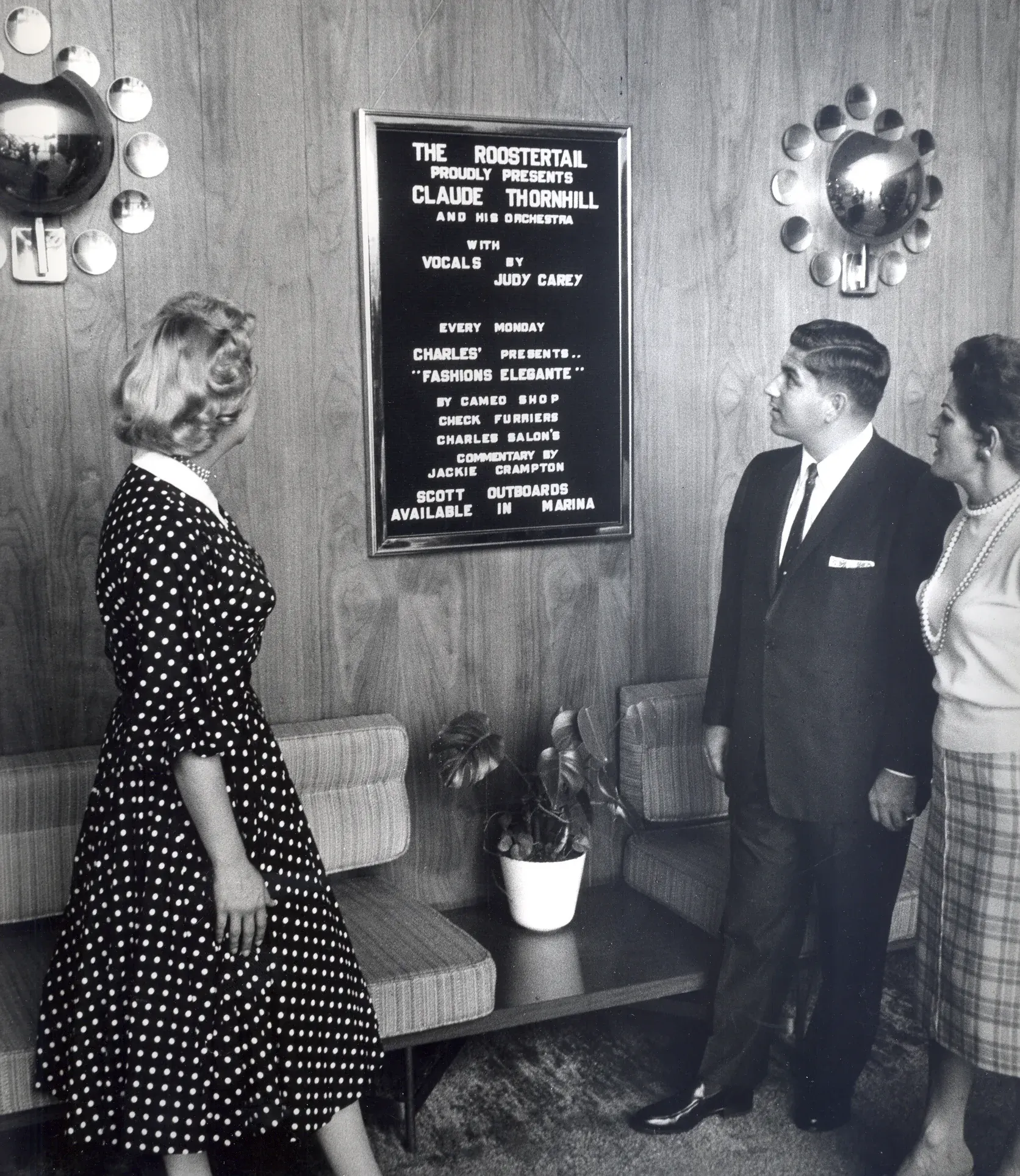
Architect Edward M. Newman was hired in 1957, and the Roostertail opened its doors in 1958 on the stretch of the Detroit River where the Gale hydroplanes had raced. The early years ran as a supper club: six-course dinners, an orchestra, coat and tie required.
In 1965, twins Tom and Jerry Schoenith built the Upper Deck. The next year it hosted seven straight Mondays of Motown, opening with the Four Tops on August 22, 1966 and closing with the Temptations. Each night was taped and replayed on WKNR, and the run produced two live albums, Four Tops Live! and Temptations Live! That November, RCA Victor recorded George Carlin in the same building.
By 1979 the restaurant and nightclub had closed, and the building shifted into the private-event venue it is today. Read the fuller account of how the building came together in 1958 and the seven Mondays of Motown recorded here in 1966, or start from the full story if you want the decades in order.
Weighing a restored building against a new one
A new build gives you a blank room and no story to compete with. A historic one gives you a room other families have already trusted with their biggest nights, if it is still actually running as one.
As of 2018, the Roostertail was averaging more than 70 weddings a year, a rate published by the Grosse Pointe News, not a one-time event. That September, for the building's 60th anniversary, the Schoenith family invited back every couple ever married there, and about 200 came. The owners themselves, Tom and Diane Schoenith, were married in the building on September 7, 1968.
That is what history buys, when it is the real, working kind: proof the building has already done this job, over and over, for people who were not so different from you. See the wedding rooms this history runs through today, then check your date and carry a list of questions with you when you tour.
Questions people ask
- What makes an event venue in Detroit historic rather than just old?
- Age alone does not make a venue historic in any useful sense. What matters is whether its original features still function on a modern event night. The Roostertail opened in 1958, and its 1961 hydraulic dance floor and original stage, where Motown acts performed, are still part of a working room today, not fenced off as display pieces.
- Does the Roostertail's original dance floor still work?
- Yes. The hydraulic rising dance floor in the Marine Room was installed in 1961 and still rises to table height at the push of a button. It is used on ordinary event nights, not preserved as a static feature, which is the detail worth confirming at any historic venue before you book it.
- How many guests can a historic room like the Marine Room hold?
- The Marine Room, the Roostertail's original historic room with the 1961 dance floor and the stage where Motown once played, holds up to 300 guests across 4,500 square feet. The newer Palm River Room upstairs holds up to 800 guests, and The Club, the smallest option, holds up to 55.
- Is a historic event venue still fully catered, or do you need outside vendors?
- At the Roostertail, yes, fully catered. The venue runs its own in-house executive chef and a full in-house bar program, including a private cocktail-hour bar in the Palm River Room. A building's age has nothing to do with its kitchen, so ask any historic venue directly whether food and bar service are in-house or outsourced.
- Is there free parking at a historic Detroit venue like the Roostertail?
- Yes, there is free, on-site parking in a private lot. Accessibility is worth asking about separately: older buildings add step-free entrances and restrooms unevenly over the decades, so confirm which specific entrances and rooms work for your guest list rather than assuming.
- What happened at the Roostertail's 60th anniversary?
- On September 7, 2018, the Schoenith family invited back every couple ever married here to mark the building's 60th anniversary, and about 200 couples returned. The date also marked 50 years since owners Tom and Diane Schoenith were married in the same building, on September 7, 1968.